






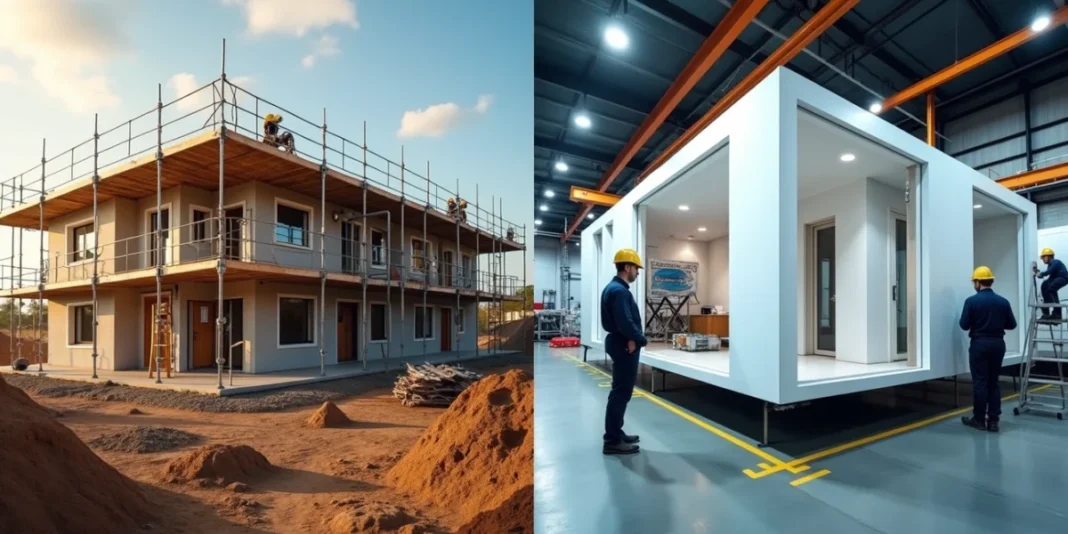

When compared to conventional dwellings, modular housing can save up to 20–30% and be finished in as little as 12–16 weeks. Despite these advantages, modular homes currently make up less than 5% of new builds in Australia.
This construction method, defined by pre-built individual components manufactured off-site in specialised facilities, is steadily gaining traction across the Australian property landscape. Builders are increasingly drawn to modular housing construction not only for its speed and cost efficiency, but also because completed modular homes are 50% more energy-efficient compared to conventional builds. Additionally, most builders now offer solar-ready or entirely off-grid options to enhance sustainability. Furthermore, modular homes are fully customisable, allowing buyers to choose from many designs, layouts, and finishes. This combination of benefits has also caught the attention of government decision-makers, particularly as a potential solution to housing and environmental challenges.
What Is Modular Housing and Why Does It Matter in Australia
The primary distinction between modular housing and traditional construction lies in their building methodologies. Traditional homes are constructed entirely on-site using conventional methods, which are dependent on weather conditions and require large teams of tradespeople. In contrast, modular homes consist of prefabricated sections built through off-site construction in controlled factory environments.
Definition of Modular Housing vs Traditional Builds
Modular construction involves manufacturing approximately 90% of the building in a factory setting. These factory-produced structures are subsequently transported to the site for final assembly and connection to services. Essentially, modular and traditional homes utilise similar materials and must meet identical building codes. Nevertheless, the controlled manufacturing environment allows modular buildings to achieve higher consistency with reduced waste. Whereas traditional builds often span months or years, modular construction enables significantly faster occupancy without compromising design quality.
Factory-Built Modules and an on-site Assembly Process
The modular construction process begins with precise factory manufacturing, while site preparation occurs concurrently. Each module includes walls, floors, roofing, and built-in features such as kitchens and bathrooms. Strict quality checks are made possible by the regulated industrial environment throughout production.
Once completed, modules are transported to the site—generally within 250 to 400 miles due to road and transport constraints. Common module dimensions typically measure 15 feet wide, 12 feet high, and 60 feet long, although these can vary based on transport requirements. On-site, cranes position the modules on prepared foundations, where they are bolted together and weatherproofed. The final phase involves connecting utilities and completing exterior and interior finishes.
Compliance with the National Construction Code (NCC)
Modular housing must meet the same National Construction Code (NCC) requirements as traditional construction. Compliance can be demonstrated through three pathways: a Deemed-to-Satisfy (DTS) Solution, a Performance Solution, or a combination of both.
Building Ministers view prefabricated and modular housing as a potential solution to Australia’s housing supply challenges. Consequently, the Australian Building Codes Board (ABCB) is working with industry to develop nationally consistent definitions for prefabricated construction within the NCC. These initiatives aim to streamline compliance for modular manufacturers while maintaining safety and performance standards.
Key Technical Drivers Behind Builder Adoption
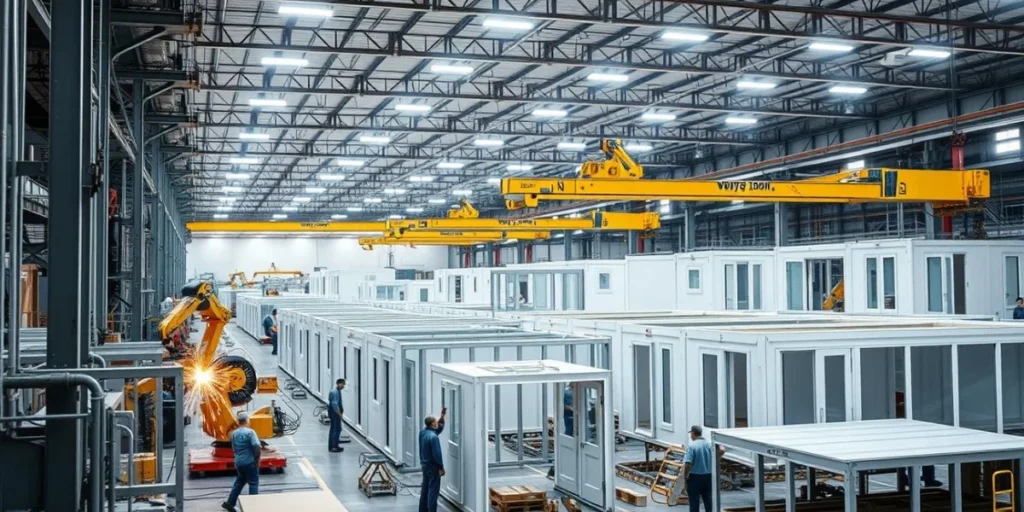
Technical innovation in construction methods is driving Australia’s builders toward modular housing solutions. The shift represents a response to industry-wide challenges, including skilled labour shortages, cost volatility and growing sustainability demands.
Reduced Build Time Through Off-Site Manufacturing
The parallel processing capability of modular construction offers perhaps its most compelling advantage. By simultaneously conducting site preparation and building fabrication, builders can slash overall project timelines by 30-50%. This acceleration occurs primarily because 60-90% of construction takes place in factory settings. The productivity gains come from several sources:
- Factory-built modules arrive 70-80% complete with integrated mechanical, electrical and plumbing systems already installed.
- Streamlined production lines enable efficient assembly regardless of external conditions.
- Projects can advance steadily without the sequential delays inherent in traditional building methods.
A specific example demonstrates this efficiency: the Coliseum Connexions project in California was completed 20-25% faster than conventional construction methods, finishing in just 16 months, compared to the estimated 20-month traditional timeline.
Cost Predictability and Lower Labour Dependency
Modular housing construction creates greater financial certainty for builders through several mechanisms. Factory environments allow for bulk material purchasing and price locking, minimising exposure to market fluctuations. Moreover, the Construction Industry Training Board reports that modular projects typically achieve an 80% reduction in on-site labour requirements, addressing chronic skilled worker shortages throughout Australia.
Improved Quality Control in Factory Environments
Factory settings enable manufacturers to implement stringent quality assurance protocols that surpass what’s possible on traditional building sites. Each module undergoes a thorough inspection before leaving the factory, ensuring consistent standards across all components. This structured approach reduces defects and rework, which can otherwise reduce productivity by up to 300%.
Minimised Weather-Related Delays
Weather disruption represents a persistent challenge for conventional builders. Rain, extreme temperatures and high winds can halt traditional construction progress for days or weeks. Conversely, the controlled factory environment enables year-round production regardless of external conditions. This climate independence maintains consistent production capacity throughout all seasons, eliminating the seasonal bottlenecks that plague traditional construction scheduling.
Challenges Builders Face in Modular Housing Construction
Despite the advantages of modular construction, Australian builders face significant obstacles when implementing these innovative building methods. The regulatory system for building practitioners is already complex for conventional construction and even more convoluted for modular construction.
Transport Logistics and Site Access Limitations
The transportation of large modular units presents considerable challenges. Modules typically measure up to 6m wide and 18.3m long, with shipping heights (including trailer) not exceeding 4.7m. Units exceeding 16 feet wide require special permits, restricted travel times, and two pilot cars. Narrow access roads, tight corners, and overhanging trees can impede the movement of delivery vehicles and cranes. Indeed, these logistical complexities require meticulous coordination and strategic planning to prevent costly delays.
Council Approvals and Zoning Restrictions
Regulatory ambiguities surrounding prefabricated construction create uncertainties that hinder its adoption. Most councils require a Development Application and Section 68 approval for the installation of manufactured homes. Additionally, every council has different zoning rules, overlays, and building regulations that impact design options. Hence, Australia’s regulatory systems need updating to remove unnecessary barriers and create a streamlined approval process.
Financing and Payment Structure Complexities
Securing appropriate construction funding requires navigating complex lender requirements. Namely, lenders struggle to evaluate collateral security for modules under factory production, often resulting in higher interest rates. Material deposits constitute the most significant pre-construction obligation, reaching 25-30% of the off-site contract value. Furthermore, loan-to-cost ratios for modular projects are typically 5-10% lower than comparable site-built projects.
Design Limitations Due to Transport Constraints
Design constraints primarily relate to highway transport requirements. Accordingly, modules must fit standard road dimensions and transport regulations. These limitations can restrict architectural creativity and complicate customisation for unique designs. At this point, Australian builders must balance design aspirations against practical transportation realities when developing modular housing solutions.
Related Article: Housing Supply Australia Surges as Building Approvals Jump 25%
How Modular Housing Is Reshaping the Industry

The digital revolution is fundamentally transforming the production of modular housing across Australia.
Integration of BIM and Digital Twin Technologies
When combined with digital twin technology, Building Information Modelling (BIM) generates virtual versions of real structures, allowing builders to spot potential errors before construction starts. This integration helps optimise factory processes, analyse energy consumption patterns, and improve decision-making for module distribution. Digital twin frameworks specifically developed for relocatable modular buildings combine BIM, Internet of Things (IoT), and geographic information systems (GIS) to support real-time monitoring and logistics simulation.
Adoption of Sustainable Materials and Low-Waste Methods
Factory construction environments can reduce waste materials by up to 90% compared to traditional methods. Innovative materials gaining popularity include recycled steel, bamboo, cross-laminated timber, and mycelium (fungal-based materials). These sustainable practices have contributed to the development of modular construction, resulting in a reduction of up to 22% in emissions compared to conventional building approaches.
Government Support for Social and Affordable Housing
The Australian government recently allocated AUD 82.57 million to support prefabricated housing, including AUD 75.38 million for state programmes and AUD 7.19 million for developing national certification processes. This investment aims to address housing shortages through faster construction methods.
Related Article: Housing Affordability in Australia: What It Means for Buyers & Investor
Changing Public Perception and Resale Value Trends
Unlike manufactured homes, modular homes appreciate at similar rates to traditional stick-built properties. Location and maintenance remain the primary value determinants rather than the construction method.
Conclusion – Modular Housing
Modular housing stands at the forefront of construction innovation across Australia. The technical advantages offered through factory-based manufacturing provide substantial benefits for both builders and homeowners. Cost savings between 20% and 30% compared to traditional construction methods certainly represent a compelling business case. Additionally, the significantly reduced build time of 12-16 weeks, compared to months or years for conventional homes, provides builders with improved project turnover.
The controlled factory environment yields multiple technical advantages. Quality control measures exceed what traditional building sites can achieve, while weather independence eliminates seasonal bottlenecks that typically plague construction schedules. These controlled conditions also contribute to modular homes achieving 50% greater energy efficiency than their conventional counterparts.
The technical evolution of modular construction continues to accelerate. Building Information Modelling and digital twin technologies now enable virtual testing before physical construction begins. Therefore, builders can identify potential issues earlier in the process, significantly reducing costly on-site modifications. Accordingly, waste reduction reaches up to 90% compared to traditional methods.
Most importantly, government recognition of modular housing’s potential has led to substantial financial support, particularly in addressing housing shortages. The allocation of AUD 82.57 million demonstrates official acknowledgment of this construction method’s viability and importance.
Though currently representing less than 5% of new builds in Australia, modular housing appears poised for significant growth. The combination of technical advantages, sustainability benefits, and economic efficiencies makes this approach increasingly attractive to forward-thinking builders. Undoubtedly, the continued refinement of modular construction techniques will further transform Australia’s housing landscape in the years ahead.
What are the main advantages of modular housing in Australia?
Modular housing offers several benefits, including 20-30% cost savings compared to traditional builds, faster construction times (12-16 weeks), improved energy efficiency, and better quality control due to factory-based manufacturing.
Are modular homes compliant with Australian building regulations?
Yes, modular homes must meet the same National Construction Code (NCC) requirements as traditional construction. They can demonstrate compliance through Deemed-to-Satisfy Solutions, Performance Solutions, or a combination of both.
What challenges do builders face when constructing modular homes?
Builders face challenges such as managing transport logistics for large modules, navigating complex council approvals and zoning restrictions, securing suitable financing, and working within design limitations due to transportation constraints.
What is the Australian government’s stance on modular housing?
The Australian government is supportive of modular housing, recently allocating AUD 82.57 million to promote prefabricated housing. This includes funding for state programmes and the development of national certification processes, recognising modular construction as a potential solution to housing shortages.