








Australia’s property market is gaining significant momentum, with Property Trends Australia 2025 showing national dwelling values rising by 1.0% in the last quarter—the fastest quarterly increase since late 2024. This growth has pushed the national median dwelling price to approximately $905,076, creating both challenges and opportunities for buyers and investors.
Meanwhile, real estate trends nationwide continue to evolve in response to several key factors. Notably, the Reserve Bank of Australia has reduced the cash rate to 3.85% as inflation trends closer to target, while financial markets anticipate two more rate cuts in the second half of the year. Market trends are further influenced by historically low vacancy rates, generally under 2% across capital cities and major regional centres, which have consequently driven national median rents sharply upward since mid-2020. Furthermore, property trends in Australia are supported by continued strong population growth, with the Queensland Government forecasting that an additional 500,000 people will move into Brisbane by 2046.
This guide examines the most significant property trends shaping Australia’s real estate landscape in 2025, providing essential insights for buyers and investors navigating this dynamic market.
Trend 1: Interest Rate Cuts and Their Ripple Effect

The RBA has already set the tone for property trends in Australia with three interest rate cuts in 2025, bringing the cash rate down to 3.60% from its peak of 4.35% in January. This shift in monetary policy is transforming the national real estate landscape.
Why Rate Cuts are Expected in Late 2025
Despite recent cuts, Australia’s major banks have varying forecasts for future rate movements. CBA predicts a cut each quarter throughout 2025, potentially lowering the cash rate to 3.35% by year-end. Westpac offers a more aggressive outlook with projected cuts in May, August and November, which could take rates as low as 2.25% by December. Additionally, NAB suggests rates could ease to 2.6% by 2026.
These predictions stem from inflation moderating to around 3.2%, inching closer to the RBA’s target band of 2-3%. The central bank’s focus appears to be shifting from reducing inflationary pressures to supporting economic growth.
Lower Rates Affect on Borrowing Power
Interest rate reductions directly increase the amount that borrowers can afford to borrow. A 25-basis-point decrease can boost borrowing capacity by approximately 2.28% for the average couple. Moreover, for every 0.5% drop in interest rates, borrowing capacity typically increases by around 5%.
In practical terms, a single person earning AUD 229,348 might gain access to an additional AUD 30,579 with just one rate cut, for couples with a combined income of AUD 458,697, a 0.25% rate cut provides roughly AUD 53,514 extra borrowing power.
Timing the Market: Buy Now or Wait?
Although waiting for further rate cuts might seem logical, this strategy carries significant risks. Rate reductions tend to spark increased competition as more buyers enter the market with improved borrowing capacity. This heightened demand typically drives property prices upward, particularly in competitive markets.
Interestingly, the current cutting cycle is most beneficial for affordable, outer suburban areas—a shift from previous cycles that favoured premium markets. Perth leads with growth rates of 15.4-15.6% in areas such as Midland-Guildford and Mandurah, while Adelaide’s outer suburbs show a strong performance with 14.4% growth.
Rather than waiting, prospective buyers might consider securing pre-approval and being ready to act quickly before prices rise further, potentially negating the benefits of any future rate cuts.
Trend 2: The Rise of the Golden Arc and Mid-Market Clusters
The country’s property hierarchy has been significantly upended by the emergence of what analysts now refer to as the “Golden Arc”—a booming corridor spanning Brisbane, the Gold Coast, and the Sunshine Coast that is reshaping Australian real estate patterns.
Brisbane, Gold Coast, and Sunshine Coast Surge
The Golden Arc has established itself as a formidable presence in the Australian property landscape. Indeed, both the Gold Coast and Sunshine Coast have become Australia’s second- and third-most expensive housing markets, respectively, with remarkably similar geometric mean house prices of AUD 1.80 million and AUD 1.74 million. These coastal regions have witnessed identical 76% price increases over the past five years. Brisbane, though more affordable at AUD 1.52m, boasts the second-highest five-year growth rate nationally at 83.5%, subsequently positioning it to join its coastal neighbours in completing this premium market cluster.
Related Article: Insights into the Brisbane Property Market: What to Expect in 2025
Perth and Adelaide Closing in on Melbourne
Simultaneously, a significant shift is occurring in Australia’s mid-market segment. Perth and Adelaide continue to gain ground on Melbourne, with property values in both cities expected to rise between 3% and 6% in 2025. In contrast, Melbourne values may adjust between a 1% fall and a 3% rise. Especially notable is Adelaide’s extraordinary performance—recording the highest value growth of any state over the past five years, with home prices increasing by an average of 80.9%. Perth’s housing market also stands out nationally, with the strongest monthly and annual home price growth.
Related Article: Melbourne Property Market 2025: Key Insights & Predictions
Implications for Long-Term Investors
For strategic investors, these structural shifts present compelling opportunities. The compression of the mid-market cluster—now spread across just a 17% price range compared to 80% five years ago—signals Perth and Adelaide may soon overtake Melbourne entirely. Accordingly, Queensland continues to stand out as an investment destination, offering a unique blend of affordability, infrastructure momentum, and population growth. Brisbane’s preparation for the 2032 Olympics is reshaping property demand, whereas Perth and Adelaide now present attractive combinations of cash flow and capital growth potential, especially in suburbs near infrastructure corridors.
This realignment represents more than a temporary fluctuation—it signals a fundamental restructuring of Australia’s property landscape that demands fresh investment strategies.
Trend 3: Regional Australia’s Million-Dollar Boom

Regional property markets across Australia have undergone a remarkable transformation, with numerous areas now boasting median house prices exceeding $1 million—a phenomenon unimaginable just five years ago.
Top Regional Areas Entering the $1M Club
Beyond capital cities, several regional hotspots have joined the exclusive million-dollar club. Initially confined to coastal enclaves, this trend has expanded to include inland regional centres as well. Popular sea-change destinations like Byron Bay, Noosa, and Kiama continue leading with premium prices, yet newcomers such as Orange, Ballarat, and Albury-Wodonga are experiencing unprecedented price growth. In fact, regional housing markets outperformed their capital city counterparts throughout 2024, with strong buyer demand continuing into 2025.
Lifestyle Appeal and Infrastructure Growth
The appeal of regional living has fundamentally shifted from merely affordability to lifestyle enhancement. Remote work policies, now permanently embedded in corporate Australia, have enabled professionals to relocate without sacrificing career opportunities. Alongside this shift, substantial infrastructure investments have transformed regional centres, with improved transport links, expanded healthcare facilities, and enhanced educational options making these areas increasingly attractive. As a result, the demographic profile of regional Australia has diversified significantly, bringing urban expectations to country settings.
Risks of Buying at Peak
Nonetheless, potential investors should exercise caution. Historical data shows regional markets typically experience more volatile boom-bust cycles than metropolitan areas. Furthermore, supply constraints that fuelled recent price growth are gradually easing as developers respond to demand. Property prices in some regional areas may have reached unsustainable levels relative to local income streams, making them vulnerable to interest rate fluctuations. Ultimately, investors must differentiate between genuinely growing regional economies and areas experiencing temporary pandemic-driven migration that might reverse as urban workplaces reopen fully.
Trend 4: Commercial Property Reshuffle
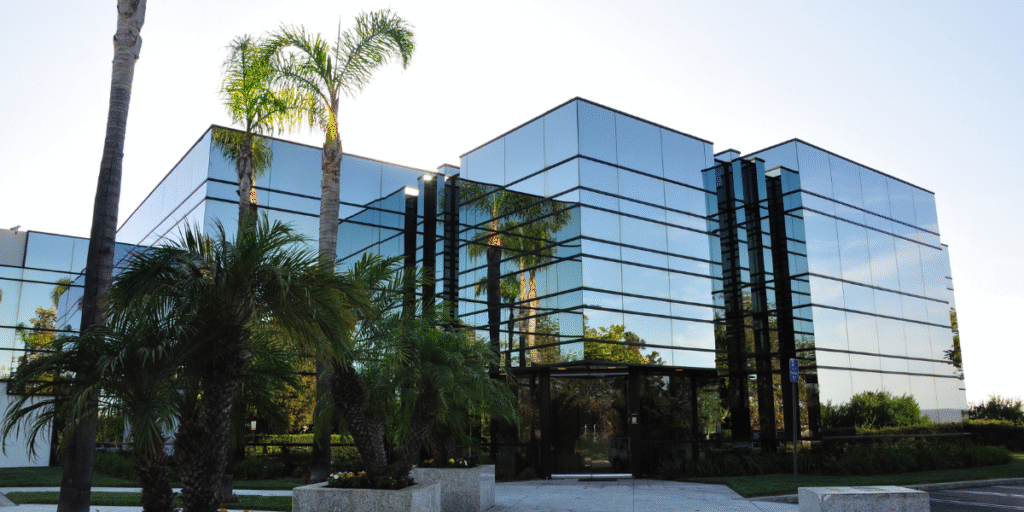
Commercial real estate in Australia is experiencing a remarkable transformation, with traditional sector hierarchies being completely redrawn across 2025. The property trends reflect an unexpected reshuffling of performance rankings among asset classes.
Retail Assets Outperforming Industrial
After years in the shadows, retail has emerged as the standout performer in Australia’s commercial property landscape, delivering a robust 5.73% total return. This sector now ranks first among all major asset classes, driven by strong income returns of 5.98%. Most impressively, sub-regional retail centres lead with an exceptional total return of 8.34%, followed by regional centres at 6.74%. This retail revival demonstrates a successful adaptation to changing consumer behaviours, supported by limited new supply and population growth, which drive improved occupancy rates. Income returns for retail currently stand at their highest since mid-2016.
Office Market Bifurcation: Prime vs Secondary
The office sector exhibits a clear division between premium and secondary assets. Overall, office spaces recorded a total return of -4.11%, remaining the clear underperformer despite maintaining reasonable income returns of 5.16% for CBD properties. However, prime assets in core locations continue to attract both institutional and offshore investors seeking quality, while secondary-grade stock faces mounting pressure. This bifurcation reflects the ongoing high vacancy rates, with the Melbourne CBD reaching 18%, as well as the permanent impact of hybrid working arrangements. Nevertheless, investor sentiment towards Australia’s office sector is improving as national vacancy rates begin trending downward.
Private Investors Driving Commercial Deals
For the first time in Australia’s history, private investors have taken the lead in the commercial real estate sector. This group invested AUD 22.17 billion into the Australian commercial market in 2023, accounting for 42.2% of total investment. Their market share expanded significantly from 30% in 2022, demonstrating remarkable resilience despite the overall market contraction. Private investors have shown a reduced reliance on debt and a more opportunistic approach, enabling them to remain active despite rising debt costs. Commercial real estate investment by high-net-worth individuals rose by 57% year-on-year, making Australia the sixth most active global market.
Conclusion – Property Trends Australia 2025
Australia’s property trends presents compelling opportunities for buyers and investors heading into 2025, despite the challenges that come with navigating this dynamic landscape. The anticipated interest rate cuts throughout the year are expected to boost borrowing capacity, while simultaneously increasing market competition, particularly benefiting affordable outer suburban areas rather than premium markets, as seen in previous cycles.
Additionally, the emergence of the “Golden Arc” spanning Brisbane, Gold Coast, and Sunshine Coast represents a fundamental restructuring of Australia’s property hierarchy. This shift, coupled with Perth and Adelaide gaining ground on Melbourne, signals a need for investors to reconsider traditional market assumptions when building their portfolios.
All things considered, success in Australia’s 2025 property market demands awareness of these evolving property trends. Prospective buyers and investors should focus on areas with strong infrastructure development, population growth, and robust economic fundamentals, rather than attempting to time interest rate movements. The property landscape has changed fundamentally, and those who modify their plans appropriately will be in the best position to profit from Australia’s upcoming real estate boom.
What are the property market expectations for Australia in 2025?
The Australian property market is expected to see growth in 2025, with national dwelling values projected to rise by 5.6%. House prices are forecasted to increase by 5.3% in the first half of the year, while apartment prices are expected to grow by 4.5% by December and match house growth in the following 12 months.
How will interest rate cuts affect the property market in 2025?
Interest rate cuts in 2025 are likely to increase borrowing capacity for buyers. For instance, a 0.25% rate cut could boost borrowing power by approximately 2.28% for the average couple. However, this may also lead to increased competition in the market, potentially driving up property prices.
Which areas in Australia are emerging as property hotspots?
The “Golden Arc,” comprising Brisbane, the Gold Coast, and the Sunshine Coast, is emerging as a significant property hotspot. Additionally, Perth and Adelaide are gaining ground on Melbourne in terms of property values. Regional areas are also seeing substantial growth, with many joining the million-dollar median house price club.
Is 2025 a good year for property investment in Australia?
2025 could be a favourable year for property investment, particularly in areas with strong infrastructure development and population growth. However, investors should carefully consider market conditions, as some regional areas may be experiencing unsustainable growth. It’s crucial to focus on locations with solid economic fundamentals.