







Finding the best suburbs to invest in Australia 2025 requires looking beyond the obvious choices. Darlington in Sydney has emerged as a standout performer, generating a remarkable 154 enquiries per unit listing over the past 12 months, despite its median unit price of $1.25 million. Meanwhile, Perth’s Chidlow topped the list of the top suburbs in Australia with an impressive 34% growth, pushing it into the $1 million median price bracket.
The Australian property market continues to show significant regional variations, with Sydney and Brisbane dominating the list of high-demand hotspots. According to recent property news Australia, houses in St Mary’s in Sydney’s Outer West recorded equally strong interest with 154 key enquiries per listing. Furthermore, Brisbane’s Buccan achieved the second-highest growth nationally at 31%. Notably, some areas like Rocklea remain relatively affordable despite flooding risks, attracting buyers who are willing to accept certain compromises. This pattern is indicative of a larger problem in the Australian housing market, as a large number of purchasers are looking for homes that “no longer exist” within their price range.
Darlington, NSW
Darlington stands out as a compact yet lucrative suburb in the heart of Sydney’s inner-city region. Located just 3 kilometres south of Sydney’s CBD, this pocket-sized neighbourhood spans a mere 0.4 square kilometres but offers significant investment potential for property buyers seeking the best suburbs to invest in Australia in 2025.
Darlington Suburb Overview
Nestled between the University of Sydney and Redfern, Darlington represents a unique blend of academic influence and urban living. The suburb’s total population reached 2,597 in 2021, showing a significant decline of 16.1% from its 2016 population of 3,097. This shift in demographics presents an interesting dynamic for potential investors.
The demographic profile of Darlington reveals a predominantly young adult population, with the primary age group being 20-29 years. This youthful characteristic is unsurprising given the suburb’s proximity to educational institutions. Furthermore, the household composition reveals that 86% of households are single occupants, while only 14% are family households. This demographic makeup directly influences the type of properties in demand.
Housing ownership patterns in Darlington have undergone notable changes over recent years. In 2021, owner-occupied homes accounted for 37.90% of the housing stock, representing a substantial increase from 25.20% in 2016. Nevertheless, the suburb remains predominantly tenant-occupied, with rental properties accounting for 73% of dwellings. This rental-heavy market creates a favourable environment for property investors.
Income levels in Darlington sit comfortably above the Greater Sydney average. The typical household in Darlington earns approximately AUD 3,657.34 per week, which is 15.2% higher than the average in Greater Sydney. Additionally, professional occupations dominate the local employment landscape, suggesting a skilled and financially stable tenant pool for investors to target.
The physical characteristics of the suburb include a single park covering nearly 0.8% of its total area. Moreover, Darlington offers excellent connectivity to neighbouring areas, with Newtown accessible within 6 minutes by car, 14 minutes by train, 23 minutes on foot, or 8 minutes by bicycle.
Darlington Investment Potential
For investors considering Darlington for their property portfolio, rental yields present a compelling case. Houses currently offer a gross rental yield of 2.86% with a weekly median rent of AUD 1,421.96. In comparison, units deliver significantly better returns with a rental yield of 4.40% and a weekly median rent of AUD 1,299.64. This yield differential makes units particularly attractive from an income perspective.
Rental rates vary by property size. For houses, two-bedroom properties command approximately AUD 1,330.22 weekly, three-bedroom houses achieve AUD 1,681.89, four-bedroom houses fetch AUD 2,140.59, and larger houses rent for around AUD 1,911.24. The median rent for all houses has increased by 1.5% over the past 12 months, indicating steady growth in rental income potential.
The tenant demographic profile in Darlington creates a unique advantage for investors. With 53% of owners having a mortgage and 73% of properties being owner-occupied, a strong rental demand exists. Additionally, the predominance of professional occupations among residents suggests the presence of reliable, higher-income tenants who can sustain premium rental rates.
Examining long-term investment metrics, houses in Darlington have delivered an average annual growth rate of 5.24%, while units have achieved a rate of 2.72%. Although units show lower long-term appreciation than houses, their significantly higher rental yields create a balanced total return profile.
The investment strategy scoring system provides additional insights for potential investors. The Cash Flow Score evaluates a suburb’s likelihood of containing properties with above-average gross yields. Similarly, the Capital Growth Score indicates recent capital growth performance and short-term outlook based on market health indicators. Finally, the Lower Risk Score assesses long-term value stability, tenant quality, and future liquidity. These metrics help investors align Darlington’s characteristics with their specific investment strategies.
Mortgage repayment data reveal that households in Darlington typically repay over AUD 611.60 monthly. This figure, combined with the suburb’s income data, suggests a relatively manageable debt service ratio for property owners.
When evaluating Darlington against other top suburbs in Australia, its key advantages include proximity to Sydney CBD, strong unit market performance, above-average rental yields for units, and a professional tenant demographic. Moreover, its compact size, established infrastructure, and proximity to educational institutions make it a sustainably attractive location for both renters and buyers.
As part of the Australian property market landscape, Darlington represents a premium inner-city investment option with strong fundamentals. While entry prices are substantial, the growth trajectories—particularly in the unit market—coupled with reliable rental demand, make it a considerable investment opportunity for investors seeking exposure to Sydney’s property market in 2025 and beyond.
St Mary’s, NSW
Located in Western Sydney, St Mary’s presents a compelling investment case with its remarkable growth trajectory and promising prospects. This thriving suburb has positioned itself as one of the best suburbs to invest in Australia 2025, underpinned by substantial capital appreciation and strategic development initiatives.
St Mary’s Suburb Overview
St Mary’s spans approximately 10.6 square kilometres, featuring 35 parks that cover nearly 19.4% of its total area. This generous allocation of green space enhances the suburb’s liveability and appeal to families seeking a balance between urban convenience and natural surroundings.
The suburb has demonstrated strong population growth, increasing from 12,195 in 2016 to 13,256 in 2021, representing an 8.7% growth rate over the five-year period. This population expansion reflects the suburb’s rising attractiveness as a residential destination within the Australian housing market.
Demographically, St Mary’s features a predominantly young to middle-aged population, with the 30-39 age bracket representing the largest segment. Household compositions primarily consist of couples with children, indicating a family-oriented community structure. Consequently, this demographic profile shapes the housing demand and rental market characteristics.
Housing ownership patterns in St Mary’s have remained relatively stable, with owner-occupation at 44.50% in 2021, showing a slight increase from 44.40% in 2016. This stability suggests a balanced market with opportunities for both owner-occupiers and investors. In fact, many residents are actively servicing mortgages, typically repaying between AUD 275,220 and AUD 365,439 per annum.
Beyond its residential characteristics, St Mary’s is strategically positioned to benefit from significant infrastructure developments. Most notably, the Sydney Metro Western Sydney Airport line and planned transport improvements are acting as key growth drivers. These developments are expected to substantially enhance connectivity and accessibility, further boosting the suburb’s investment appeal.
St Mary’s Demand Trends
The property market in St Mary’s has exhibited remarkable growth patterns that warrant attention from investors looking at the top suburbs in Australia. For houses, the median price currently stands at AUD 1,639,077.53, having achieved an impressive annual capital growth rate of 15.89%. Alternatively, another source reports the median house price as AUD 1,697,179.16, with the variation likely due to differences in data collection methodologies.
Market activity indicators reveal strong liquidity, with 141 house sales recorded over the past 12 months. Properties in this suburb typically spend just 23 days on the market before selling, signalling robust buyer demand. Furthermore, houses have experienced a quarterly growth of 4.23%, indicating continued positive momentum.
The unit market in St Mary’s presents an equally compelling investment case. The median unit price currently stands at AUD 1,060,354.73, having achieved substantial annual capital growth of 10.08%. However, quarterly growth for units has been more moderate at 1.99%, suggesting a slightly cooling market in the short term.
When examining price differentiation across property sizes, three-bedroom houses command a median price of AUD 1,218,610, whereas four-bedroom houses reach approximately AUD 1,276,710. This relatively modest price increase for an additional bedroom offers an interesting value proposition for families and investors alike.
St Mary’s Investment Potential
For investors considering St Mary’s for their property portfolio, rental yields present a compelling case. Houses currently offer a gross rental yield of 3.09% with a weekly median rent of AUD 840.94. Units deliver significantly better returns with a rental yield of 4.42% and the same weekly median rent of AUD 840.94. This yield differential makes units particularly attractive from an income perspective.
The long-term investment metrics for St Mary’s are especially promising. Houses have delivered an average annual growth rate of 10.75%, while units have achieved a 7.55% growth rate. These figures place St Mary’s among the strongest performers in the Australian property market, offering both capital growth and income potential.
Mortgage serviceability data provides additional context for investors. Households in St Mary’s typically repay between AUD 275,220 and AUD 365,439 on mortgages. When evaluated against the median rent, this creates potentially optimistic cash flow scenarios for investors with substantial deposits.
St Mary’s benefits from strategic positioning within Western Sydney’s growth corridor. The suburb is set to capitalise on the economic boom driven by transformative projects, such as the Western Sydney International Airport and the Aerotropolis. It is anticipated that these developments will boost demand for housing and drive rental growth by generating thousands of jobs in a variety of industries.
Local economic activity is expanding simultaneously, with growth in the commercial and retail sectors providing job opportunities in retail, hospitality, healthcare, and other services. This economic diversification strengthens the suburb’s resilience and long-term investment prospects.
Looking ahead, property values in St Mary’s are poised for further appreciation as the suburb assumes its role as a key transport hub. The confluence of improved connectivity, urban renewal initiatives, and the St Mary’s Town Centre Master Plan is creating a virtuous cycle of investment and development.
For professional investors, St Mary’s offers strategic advantages through excellent connectivity to major employment hubs, including Parramatta, Penrith, and the emerging Western Sydney Aerotropolis. This accessibility, combined with relatively affordable entry points compared to inner-city alternatives, positions St Mary’s as an investment destination with substantial upside potential for property news Australia to highlight in the coming years.
Coolaroo, VIC

Situated in Melbourne’s northern corridor, Coolaroo has emerged as an affordable investment hotspot with impressive growth figures and attractive rental yields in the Australian property market. Just 19 kilometres from Melbourne’s Central Business District, this multicultural suburb presents a compelling case for property investors seeking value in Victoria.
Coolaroo Suburb Overview
Coolaroo occupies approximately 3.1 square kilometres within the City of Hume, featuring four parks that cover nearly 3.6% of its total area. This modest-sized suburb maintains a stable population, having grown marginally from 3,191 in 2016 to 3,193 in 2021—a mere 0.1% increase.
The demographic profile reveals a predominantly young adult population, with the 20-29 years age bracket representing the largest segment. Household compositions primarily consist of couples with children, creating a family-oriented community structure. This demographic makeup directly shapes the housing demand and tenant profile for prospective investors.
Housing ownership patterns in Coolaroo have undergone slight changes in recent years. In 2021, owner-occupied homes accounted for 63.40% of the housing stock, representing a decrease from 66.10% in 2016. This shift towards rental accommodation presents potential opportunities for investors looking to enter the market.
The local employment landscape is distinctive, with residents primarily working in occupations related to machinery operation and driving. This employment profile suggests a stable working-class community, which in turn influences both affordability considerations and rental market dynamics.
Excellent educational facilities, including the local schools such as Coolaroo South Primary School, complement Coolaroo’s family-oriented environment. The suburb also benefits from good public transport access, most notably the Coolaroo railway station on the Craigieburn line.
Coolaroo Investment Potential
For investors considering Coolaroo for their property portfolio, rental yields present a compelling case. Houses currently offer a gross rental yield of 4.65% with a weekly median rent of AUD 749.21. This yield figure substantially outperforms the Melbourne metropolitan average of 3.3%, creating attractive income potential.
Beyond the current yield advantages, rental growth also appears strong. Another source indicates the median weekly rent has reached AUD 764.50, representing a substantial 13.63% annual increase. This rent growth trajectory enhances the investment case for the suburb as one of the top suburbs in Australia for rental returns.
The affordability profile of Coolaroo adds to its investment appeal. With a median house price substantially below the Melbourne metropolitan average, the suburb offers more accessible entry points for investors. This affordability, paired with strong growth rates, creates potential for capital appreciation alongside immediate cash flow benefits.
Mortgage serviceability data provides additional context for investors. Households in Coolaroo typically repay between AUD 152,900 and AUD 212,539 on mortgages. When evaluated against the median rental income, this creates potentially optimistic cash flow scenarios for investors with substantial deposits.
Looking ahead, several factors support Coolaroo’s continued growth prospects. Its location within Melbourne’s northern growth corridor positions it to benefit from ongoing infrastructure development and population expansion. The suburb’s relative affordability compared to neighbouring areas likewise creates natural demand pressure as buyers seek value in the Australian housing market.
Among the best suburbs to invest in Australia 2025, Coolaroo stands out for its combination of strong recent capital growth, above-average rental yields, and accessible price points. For investors seeking exposure to the Melbourne market without the premium price tags of inner suburbs, Coolaroo presents a balanced investment proposition with both income and growth potential.
Rocklea, QLD
Rocklea has quietly become one of Brisbane’s fastest-growing investment locations, with recent house price surges establishing it as a worthy contender among the best suburbs to invest in Australia 2025. Positioned 9 kilometres south of Brisbane’s CBD, this formerly overlooked suburb is witnessing extraordinary capital growth rates that have caught the attention of savvy property investors nationwide.
Rocklea Suburb Overview
Stretching across 9.3 square kilometres, Rocklea features 22 parks that cover approximately 13.8% of its total area. There are 1,672 people living in Rocklea, with an average of 2.3 people per household. Rocklea’s demographic profile reveals a predominantly younger adult population, with the 20-29 age group representing the largest segment.
Household composition data indicate that childless couples form the majority of residents in Rocklea. These households typically manage mortgage repayments ranging from AUD 214,060 to AUD 273,699. Yet, beyond its residential characteristics, employment patterns show that professionals constitute the primary occupation category among locals.
Housing ownership patterns have undergone subtle changes recently, with the percentage of owner-occupied homes decreasing slightly from 51.10% in 2016 to 49.80% in 2021. This shift suggests a gradual transition toward investment properties within the suburb. Indeed, current figures show approximately 46% of properties are renter-occupied, creating a balanced market for both owner-occupiers and investors.
The average weekly household income in Rocklea sits at AUD 2,282.78, which is 19.3% below the Greater Brisbane average. Nevertheless, this moderate income level still supports a functioning Australian property market with healthy transaction volumes.
Rocklea Investment Potential
For investors considering Rocklea for their property portfolio, rental yields present a compelling case. Houses currently offer a gross rental yield of 4.19% with a weekly median rent of AUD 840.94. In comparison, units deliver slightly lower returns with a rental yield of 3.87% and a weekly median rent of AUD 629.94.
Recent rental growth figures show houses experienced a 7.61% increase in median rents over the past year, whereas units saw an even stronger 9.85% growth. This robust rental growth strengthens the investment case for Rocklea, as it demonstrates strong tenant demand across all property types.
Looking ahead, several factors support Rocklea’s continued growth prospects. Development projects valued at AUD 46.79 million are planned for the suburb in 2025. Although this investment level is modest compared to some neighbouring areas, it nonetheless indicates an ongoing commitment to the suburb’s development.
Throughout the Australian property market, Rocklea’s positioning as an affordable option is gradually changing as prices rise and supply constraints persist. The suburb remains in Brisbane’s more affordable bracket, with 43.8% of Brisbane houses selling below AUD 1,299,640.17. This accessibility, combined with strong growth rates, creates potential for further capital appreciation alongside healthy rental returns.
Admittedly, Rocklea does face specific challenges, most notably flooding risks. Yet, these risks appear to be priced into the market, creating an opportunity for investors willing to accept this aspect of the location in exchange for stronger growth and yield potential than many other top suburbs in Australia.
Overall, among the best suburbs to invest in australia 2025, Rocklea stands out for its combination of strong recent capital growth, above-average rental yields, and relatively accessible price points compared to many Brisbane alternatives.
Forestdale, QLD
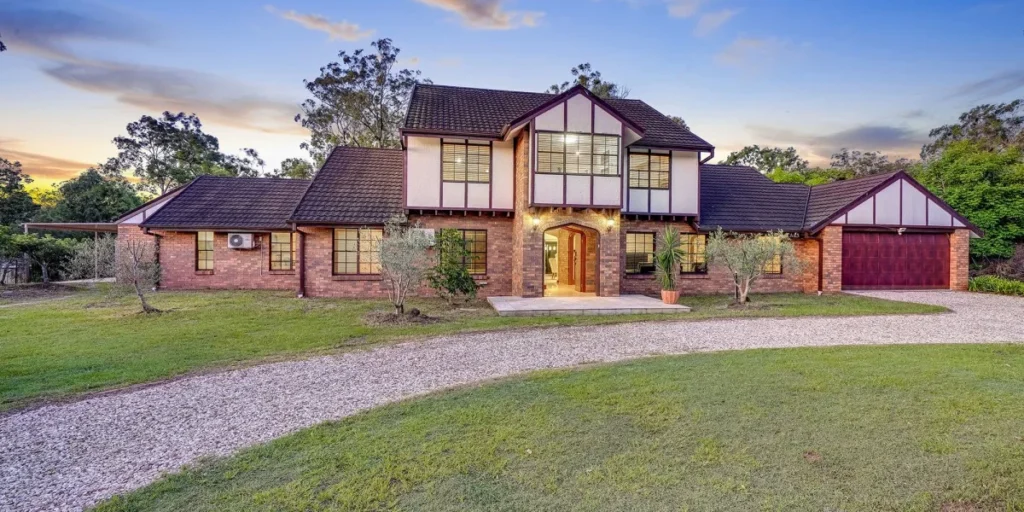
Among the affluent acreage havens in Queensland’s property landscape, Forestdale stands as a premium investment opportunity with exceptional capital growth figures. Located in Brisbane’s outer ring, this exclusive suburb offers large blocks and upscale residences that continue to attract high-income professionals.
Forestdale Suburb Overview
Spanning approximately 6.1 square kilometres, Forestdale features 10 parks covering nearly 15.9% of its total area. The population has shown modest growth, increasing from 2,531 in 2016 to 2,560 in 2021, representing a 1.2% rise.
Forestdale residents primarily fall within the 50-59 age bracket, with couples and children comprising the majority of household compositions. Most locals work in professional occupations; however, clerical and administrative workers (17.11%) and technicians and trade workers (15.71%) form substantial employment segments.
The average household income is approximately AUD 4,090.05 per week, a remarkable 44.7% above the Greater Brisbane average. Homeownership rates remain exceptionally high, with 92.70% of properties being owner-occupied in 2021.
Forestdale Demand Trends
The housing market in Forestdale has demonstrated robust performance. The median house price currently ranges between AUD 2.48 million and AUD 2.57 million, having achieved an annual capital growth of 10.53%. Alternatively, another source indicates a 4.2% price increase over the past 12 months.
Market activity shows reasonable liquidity, with 27-28 house sales recorded over the past year. Properties typically remain on the market for approximately 90 days before selling, suggesting a steady yet selective buyer pool.
Forestdale Investment Potential
For investors examining Forestdale’s potential, rental yields present a compelling case. Houses currently offer a gross rental yield of 3.15% with a weekly median rent of AUD 1,987.69. Units, though scarce with just one sale recorded last year, potentially deliver better returns with an estimated rental yield of 3.81%.
Given Forestdale’s premium positioning and strong growth trajectory, it represents an opportunity for investors seeking exposure to Brisbane’s upper-market segment within the Australian housing market.
Conclusion – Best Suburbs to Invest in Australia 2025
The Australian property market continues to offer diverse investment opportunities across different price points and locations. Throughout this analysis, several standout suburbs have demonstrated exceptional potential for investors seeking alternatives to mainstream options.
Darlington stands as a prime example of inner-city investment potential with its remarkable 9.80% annual growth for units and strong rental yields of 4.40%. Meanwhile, St Mary’s showcases impressive capital growth figures, with houses appreciating 15.89% annually, underpinned by strategic infrastructure developments and transport improvements. Coolaroo emerges as an affordable Melbourne option with houses yielding 4.65% and growing at 11.81% annually – substantially outperforming the broader Melbourne market. Equally impressive, Rocklea has recorded extraordinary annual growth of 26% despite its flooding challenges, proving that risk-adjusted returns can be substantial for discerning investors.
At the premium end, Forestdale appeals to investors targeting affluent demographics with its 10.53% annual growth and weekly rents approaching $2,000 for houses. This diversity across the Australian property market highlights how different locations cater to varying investment strategies and budgets.
Australian property continues to reward investors who conduct thorough research and identify emerging hotspots before mainstream recognition drives prices upward. These highlighted suburbs exemplify the opportunities available to investors willing to look beyond obvious choices and understand the specific drivers of each local market.
What are the top suburbs in Australia for property investment in 2025?
Based on recent market trends, some of the best suburbs for property investment in Australia in 2025 include Darlington in Sydney, St Marys in Western Sydney, Coolaroo in Melbourne, and Rocklea and Forestdale in Brisbane. These suburbs offer a mix of strong capital growth potential and attractive rental yields.
Which Australian suburb has shown the highest recent price growth?
Among the highlighted suburbs, Coolaroo in Melbourne offers some of the most attractive rental yields, with houses delivering gross rental yields ranging from 4.1% to 4.95%. St Mary’s in Western Sydney also presents strong yields, particularly for units at around 4.42%.
What makes Darlington in Sydney an attractive investment option?
Darlington stands out due to its high demand, with 154 enquiries per unit listing. Despite a high entry price, it offers solid rental yields, especially for units (around 4.4%). Its proximity to the University of Sydney and major employment hubs enhances its appeal to a specific tenant demographic.