
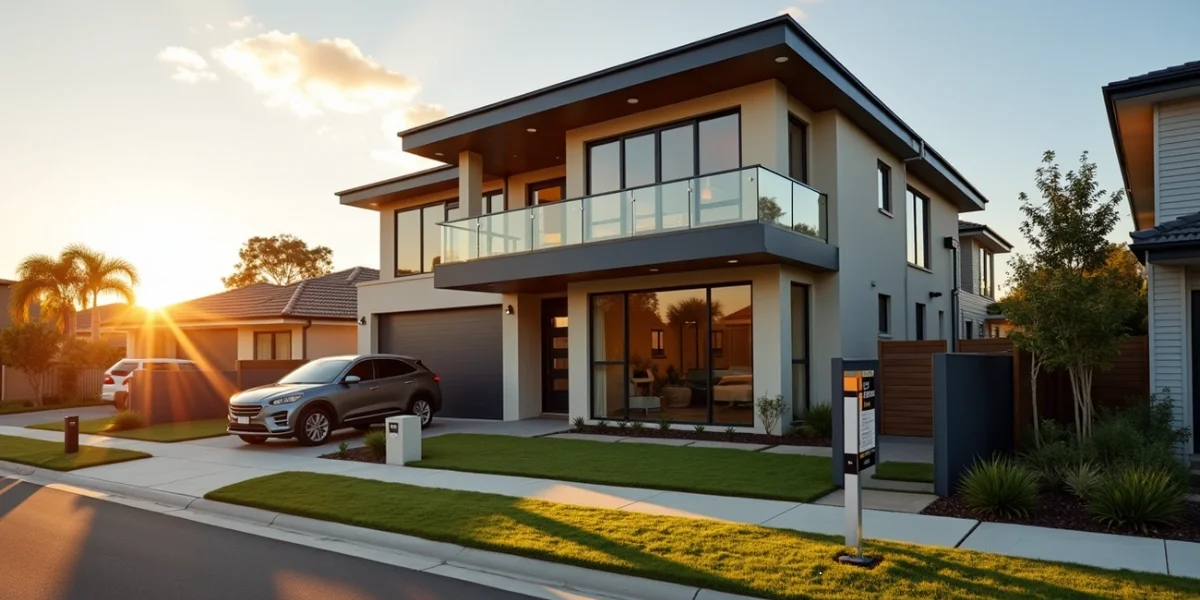
Australia house price expectations remain bullish as property values continue their remarkable upward trajectory despite economic headwinds. Cotality’s national Home Value Index rose 1 per cent in November, marking the third consecutive month of values rising by 1 per cent or more. However, this represents a slight deceleration from October’s 1.1 per cent growth, as some of the heat dissipates from the most significant capital cities.
House prices rising across the nation have pushed the median property value to A$888,941 ($581,990), with house prices climbing 7.5% throughout 2025. Particularly noteworthy is the performance of mid-sized capitals, with Perth surging 2.4 per cent and Adelaide up 1.9 per cent in November alone. Despite concerns that the property market might cool, these figures contradict any notion that house prices are declining in Australia. In fact, according to Proptrack data, the average house price increase in Australia has reached 8.7 per cent over the past 12 months, equating to approximately $77,900 per property.
Though the Reserve Bank of Australia has implemented three interest rate cuts this year, an unexpectedly hot inflation report for the third quarter has diminished prospects for further monetary easing, potentially affecting future market dynamics.
Australia Records Third Straight Month of House Price Growth

The national property market continues its resilient performance with dwelling values climbing 1.0% in November, marking the third consecutive month where Australian home values have increased by 1.0% or more. This growth pattern has pushed property prices to new record highs across most capital cities, with national values now 51% higher than they were five years ago.
Mid-sized capital cities significantly outshone their larger counterparts in November. While Sydney and Melbourne recorded modest gains of 0.5% and 0.3% respectively, every other capital city saw increases of at least 1.0%. Perth emerged as the standout performer with a robust 2.4% monthly rise, adding approximately AUD 32,108 to its median dwelling value.
Supply constraints continue to be a crucial factor driving these regional disparities. Perth’s listings are currently 40% below average levels, whereas Sydney faces a smaller supply deficit with listings just 2.2% below the five-year average. Additionally, regional markets have outpaced capital cities, with regional prices rising 0.6% in November and 9.3% year-on-year, compared to capital cities’ 8.5% annual growth.
Notably, most state capitals have seen the lower quartile of the market rising fastest, suggesting affordability concerns are shaping buyer behaviour. Nevertheless, Melbourne presents an exception with its middle market segment experiencing the strongest growth.
Mid-Sized Capitals Outpace Sydney and Melbourne
A stark contrast has emerged in Australia’s housing landscape as mid-sized capitals continue to outshine their larger counterparts. Perth has established itself as the nation’s standout performer with dwelling values surging 2.4% in November alone, adding over AUD 32,108 to its median price in just four weeks. Conversely, Sydney and Melbourne recorded significantly more modest gains of 0.5% and 0.3% respectively.
This divergence between markets mirrors patterns previously seen in late 2023 and 2024. Supply constraints play a crucial role in this disparity, with Perth listings currently sitting more than 40% below the five-year average. Meanwhile, Sydney faces a smaller supply deficit with listings just 2.2% below average levels.
Adelaide has likewise delivered impressive results, recording 2.1% quarterly growth in Q4 2024 and subsequently overtaking Perth as the strongest annual performer with a 10.77% year-on-year increase. Both cities have now surpassed Melbourne in median dwelling values, with Adelaide at AUD 1,209,125 and Perth at AUD 1,200,639 compared to Melbourne’s AUD 1,186,563.
Brisbane has also joined the surge, with house prices climbing 3.7% quarterly and 10% annually, making it Australia’s second most expensive market. Consequently, Melbourne now trails behind Sydney, Brisbane, Adelaide and Perth in the price rankings—a dramatic reversal from its traditionally strong position. Regional markets have maintained their edge, outpacing the capitals with annual growth of 9.3% compared to 8.5%, and five-year gains of 64% versus 47%.
Interest Rate Outlook and Lending Rules Reshape Buyer Sentiment
Shifting interest rate expectations have begun to reshape Australian house price expectations heading into 2026. The Reserve Bank lowered the cash rate three times during 2025, initially boosting sentiment in the housing market. Yet, recent data indicating persistent inflation has tempered expectations of further cuts—with some economists now forecasting rate hikes instead.
“The fact the outlook has changed is really changing buyer decision-making,” noted Cotality head of research Eliza Owen. This shift has already impacted market activity, with auction clearance rates trending lower since mid-September, falling below the decade average by mid-November.
Simultaneously, the banking regulator APRA announced it would restrict high debt-to-income ratio loans to 20% of a bank’s new lending starting February 2026. This applies to debt ratios above six—for example, a household with an annual income of AUD 152,899 receiving loans, pushing total debts above AUD 917,394.
Moreover, Cotality calculated that while rate cuts increased borrowing capacity by AUD 84,094, home values have subsequently risen by AUD 91,739, effectively erasing benefits for new buyers. Furthermore, financial markets are now pricing in a 50-50 chance of a rate hike at the end of 2026, indicating that slower price growth may be on the horizon.
Conclusion – Australia House Price Expectations
Australia’s property market remains remarkably resilient despite challenging economic conditions. Undoubtedly, the sustained growth across three consecutive months demonstrates the market’s underlying strength, with the national median dwelling value climbing to an impressive A$888,941. Though Sydney and Melbourne have shown signs of cooling with modest gains, mid-sized capitals certainly stole the spotlight. Perth and Adelaide, specifically, have emerged as standout performers, even surpassing Melbourne in median property values—a significant shift in the traditional market hierarchy.
Supply constraints continue to drive regional disparities, with Perth listings sitting 40% below average levels compared to Sydney’s 2.2% deficit. Additionally, regional markets continue to maintain their advantage over capital cities, with stronger annual growth rates, highlighting the changing preferences of Australian homebuyers.
Throughout 2025, the interest rate environment has been quite important. Despite three rate cuts bolstering initial market confidence, recent inflation data has altered expectations considerably. The prospect of future rate hikes, coupled with APRA’s upcoming restrictions on high debt-to-income loans, may temper the market’s exuberance moving forward. This regulatory change, scheduled for February 2026, will likely reshape lending patterns and buyer behaviour across the country.
Overall, while Australia’s housing market has demonstrated exceptional resilience throughout 2025, several factors point toward a potential moderation ahead. The combined effects of changing interest rate outlooks, tightening lending regulations, and affordability constraints suggest the property market might experience more balanced growth in 2026. Nevertheless, regional variations will almost certainly persist as supply-demand dynamics continue to differ significantly across Australian cities and regions.
How much have Australian house prices increased recently?
Australian house prices have risen by 7.5% throughout 2025, with the national median property value reaching A$888,941. The average house price increase over the past 12 months was 8.7%, equating to approximately $77,900 per property.
Which Australian cities are experiencing the highest property price growth?
Mid-sized capitals are outpacing larger cities. Perth and Adelaide are leading the growth, with Perth surging 2.4% and Adelaide up 1.9% in November alone. Brisbane has also seen significant growth, becoming Australia’s second most expensive market.
How are interest rates affecting the housing market in Australia?
While the Reserve Bank of Australia implemented three interest rate cuts in 2025, recent inflation data has reduced expectations for further cuts. This shift in interest rate outlook is altering buyer decision-making and may result in slower price growth in the future.
Are regional property markets performing differently from capital cities?
Yes, regional markets are outperforming capital cities. Regional prices rose 0.6% in November and 9.3% year-on-year, compared to capital cities’ 8.5% annual growth. Over five years, regional markets have gained 64% compared to 47% in capital cities.
What new lending rules are being introduced, and how might they affect the housing market?
The banking regulator, APRA, is introducing restrictions on high debt-to-income ratio loans, limiting them to 20% of a bank’s new lending starting in February 2026. This applies to debt ratios above six and may impact borrowing capacity and future house price growth.