Carbon credits represent an $851 billion market opportunity, yet many investors remain unsure about how to participate. As carbon pricing now covers 28 per cent of global emissions and generates over $100 billion annually, understanding what carbon credits are and how do carbon credits work has become essential for investors.
This guide explains carbon markets, carbon trading mechanisms, and provides a step-by-step approach to trading carbon credits. Whether someone seeks compliance credits or voluntary market opportunities, this article offers the foundational knowledge needed to begin investing confidently.
Carbon Credits and How Do They Work
Carbon Credits Explained
Carbon credits are certificates issued for projects that help remove carbon from the atmosphere or prevent emissions from entering it in the first place. Each credit represents a quantitative and verifiable reduction, avoidance, or removal of one tonne CO2e from the atmosphere. These tradeable permits serve as quantifiable proof that specific climate action has occurred.
Projects generating carbon credits span multiple categories. Reforestation initiatives restore forested areas, whilst renewable energy projects replace fossil fuel consumption. Direct air capture technology extracts CO2 directly from the atmosphere. Additional project types include clean cooking solutions, community reforestation efforts, and landfill gas-to-energy conversions.
Standard bodies play an important role in preserving credit integrity. Verra’s Verified Carbon Standard (VCS), Gold Standard (GS), American Carbon Registry (ACR), and Climate Action Reserve (CAR) all have rigorous methodology and verification protocols. These third-party organisations define detailed rules that carbon projects must meet to generate high-quality credits, setting eligibility criteria and carbon accounting frameworks.
Once purchased by an end user, credits are permanently retired in a registry. This retirement process removes them from circulation, ensuring each credit contributes uniquely to climate action without risk of double-counting. The registry functions as a comprehensive database holding all credit details, including standard, methodology, geography, vintage, and issuance date.
The Role of Carbon Markets
Carbon markets are trading schemes that provide financial incentives for climate change mitigation. These systems allow greenhouse gas emission reductions and removals to be quantified into carbon credits that can be bought and sold. The market operates through two primary structures: compliance markets and voluntary markets.
Compliance carbon markets function as mandatory, government-regulated systems where certain companies or industry sectors must adhere to emissions limits set by law. The EU Emissions Trading System exemplifies this approach. Companies receive pollution permits (allowances) that allow them to emit specific quantities of CO2e. When a company releases emissions, it must surrender corresponding allowances to regulators.
By contrast, voluntary carbon markets operate without government regulation. These markets allow companies, organisations, and individuals to voluntarily purchase and sell carbon credits to fulfil their own climate commitments, such as achieving net-zero goals. Interestingly, these two markets are increasingly converging. Sweden and Switzerland now allow voluntary credits for compliance purposes, whilst some corporations consider using credits from the UN Paris Agreement Crediting Mechanism for voluntary climate goals.
A typical carbon credit transaction involves several key steps. Buyers conduct due diligence on selected projects and sellers. Following this, a purchase agreement is executed. Credits then transfer from the seller’s account to the buyer’s account on a public registry. Finally, credits are retired or cancelled in the buyer’s name.
Carbon Credits vs Carbon Offsets
Carbon credits and carbon offsets are commonly used interchangeably; however, they pertain to different goods. Understanding this difference helps investors choose appropriate instruments for their goals.
Carbon credits typically represent reductions in greenhouse gas emissions released into the atmosphere. These are generally created by governments within cap-and-trade systems, where organisations receive specific emissions allowances. Companies that reduce emissions below their allocated cap can sell excess credits to businesses unable or unwilling to cut their own emissions.
Carbon offsets, on the other hand, are the removal of greenhouse gases from the environment through carbon sequestration. Offset-producing activities include planting forests, capturing methane at landfills, and using technology to convert CO2 into usable products. Independent companies create these offsets, which are then sold to entities that emit or have emitted CO2.
Another key distinction lies in market structure. Carbon credits are generally transacted in compliance markets, whilst offsets trade primarily in voluntary markets. High-quality credits typically cost between £15.29 to £76.45 per tonne, whereas lower-cost options often lack transparency or quality assurance. This price differential reflects project quality, verification rigour, and additional co-benefits such as biodiversity protection or community empowerment.
Understanding Carbon Markets Before You Invest

Investors entering carbon markets must first understand the fundamental distinction between compliance and voluntary systems. Each operates under different rules, serves distinct purposes, and presents unique investment opportunities.
Compliance Carbon Markets
Compliance carbon markets are regulatory systems requiring specific industries to cap or reduce greenhouse gas emissions. Governments design, implement, and enforce these mandatory programmes, deciding which greenhouse gases and sectors to include, how permits are allocated, and rules governing carbon unit trading.
The European Union Emissions Trading System stands as the world’s largest carbon market, covering approximately 40 percent of EU greenhouse gas emissions. Under this cap-and-trade model, total emissions are capped and businesses must either purchase emission allowances or reduce emissions. The EU ETS accounted for roughly 87 percent of global market value in 2023.
China launched its national ETS in 2021, now covering about one-seventh of global emissions from fossil-fuel combustion. Unlike the EU’s absolute cap system, China uses intensity-based benchmarks linking allowances to output levels. California’s Cap-and-Trade Programme and South Korea’s market represent additional major compliance systems.
Regulated participants must surrender sufficient permits at the end of each compliance period to cover their emissions. Non-compliance typically results in financial penalties, fines, or public naming. Furthermore, compliance markets allow finance and trading communities to participate by buying allowances on behalf of compliance entities or trading allowance derivatives on secondary markets.
Voluntary Carbon Markets
Voluntary carbon markets operate outside regulatory frameworks, driven by businesses and individuals taking proactive sustainability steps. Companies use these markets to achieve carbon neutrality or meet net-zero goals by purchasing carbon offsets. The voluntary market is projected to grow at a CAGR of 17 per cent by 2035.
Participation remains open to anyone, without strict regulatory oversight, though independent standards such as VCS and the Gold Standard increasingly govern creditworthiness. The value chain involves project developers, registries, brokers, and corporations seeking to meet sustainability targets. Developers undertake projects specifically to generate offsets, whilst some use certificates as additional revenue streams for existing assets.
Brokers procure carbon offsets and transfer them to buyers or retire them on buyers’ behalf. They offer advisory services where buyers specify criteria such as sectors, regions, volume, and receive lists of options with prices. In 2024, total transaction value reached approximately AUD 818.01 million.
How Carbon Trading Works
Carbon trading encompasses buying and selling certificates, primarily permits and offsets. Pricing in compliance markets depends on supply and demand of permits, influenced by government-issued permit volumes through free allocation or auctions. Many schemes allow participants to bank permits into future periods.
Exchanges like the European Energy Exchange provide platforms for trading emission units, offering clearing and auctioning services. Trading occurs through spot contracts and derivatives, including futures and options. Revenues from compliance carbon markets reached close to AUD 1.53 trillion in 2023.
Compliance units resemble commodities with minimal price variation; therefore, transactions often occur via exchanges. In contrast, offset prices vary significantly by additionality, permanence, sector, and location, making them primarily traded through brokers.
Key Players in Carbon Markets
The carbon market ecosystem includes policymakers who set emissions caps and distribute permits. Compliance entities are companies mandated to participate, typically individual facilities in high-emission industries. Non-compliance entities include retail speculators, commodity traders, brokers, and financial intermediaries such as commercial banks.
Major players in the industry include 3Degrees, with approximately USD 130 million in annual revenue; Climate Impact Partners, which has facilitated reductions of over 150 million tonnes of CO2e through 600-plus projects; and South Pole, which delivers end-to-end solutions in renewable energy and carbon removal technologies.
Step-by-Step Guide to Investing in Carbon Credits
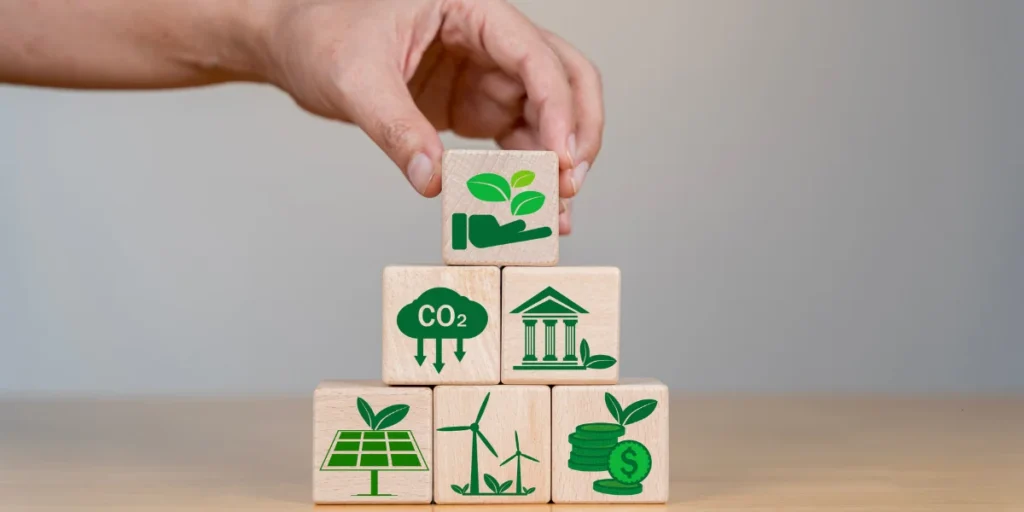
Successful carbon credit investment requires a methodical approach that balances financial objectives with climate impact. The following seven steps provide a framework for entering carbon markets with confidence.
Step 1: Determine Your Investment Goals
Investment goals shape every subsequent decision. Companies pursuing carbon neutrality or net-zero commitments typically align credit purchases with their broader sustainability strategy, complementing efforts in renewable energy and supply chain improvements. Investors seeking financial returns view carbon credits as tradeable assets, profiting through spot buying and reselling at higher prices or purchasing pre-issuance credits for future delivery. Australian ACCU prices, for instance, could double to around AUD 114.67 before 2035.
Step 2: Choose Between Compliance and Voluntary Markets
Market selection depends on regulatory obligations and investment horizons. Compliance markets offer better liquidity and standardisation, making them suitable for larger institutional investments. Voluntary markets, whilst demanding thorough due diligence, can deliver higher returns and allow strategic alignment with specific project types or geographies.
Step 3: Decide on Your Investment Approach
Four primary pathways exist for trading carbon credits. Spot purchases involve buying issued credits for immediate delivery, carrying lower delivery risk. Forward contracts secure pre-issuance credits at potentially lower prices but introduce project completion uncertainty. Direct project investment provides rights to all generated credits in exchange for development capital. Carbon ETFs offer diversified exposure with minimal operational complexity.
Step 4: Research and Vet Carbon Projects
Project quality determines both environmental impact and investment value. The ICVCM Core Carbon Principles provide systematic assessment frameworks covering governance, emissions impact, and sustainable development. Independent rating agencies like BeZero and Sylvera score projects from D to AAA based on additionality, permanence, and leakage risks. Investors should verify third-party certifications under Verra VCS, Gold Standard, or Article 6 mechanisms.
Step 5: Select a Platform or Broker
Platform selection influences transaction costs and support levels. Carbonplace, founded by nine global banks, provides direct access to 13 registries with centralised reporting mechanisms. The UN Carbon Offset Platform offers free transactions between buyers and UNFCCC-certified projects, with developers setting prices directly. Brokers provide personalised service and negotiation expertise but charge commissions that increase overall costs.
Step 6: Make Your First Investment
Prior to purchasing, establish registry accounts where applicable, which typically require an annual fee of around AUD 764.50. Execute purchase agreements specifying delivery timelines, payment schedules, and quality standards. Credits transfer to the buyer’s registry account, where they can be retired against emissions targets.
Step 7: Monitor and Manage Your Portfolio
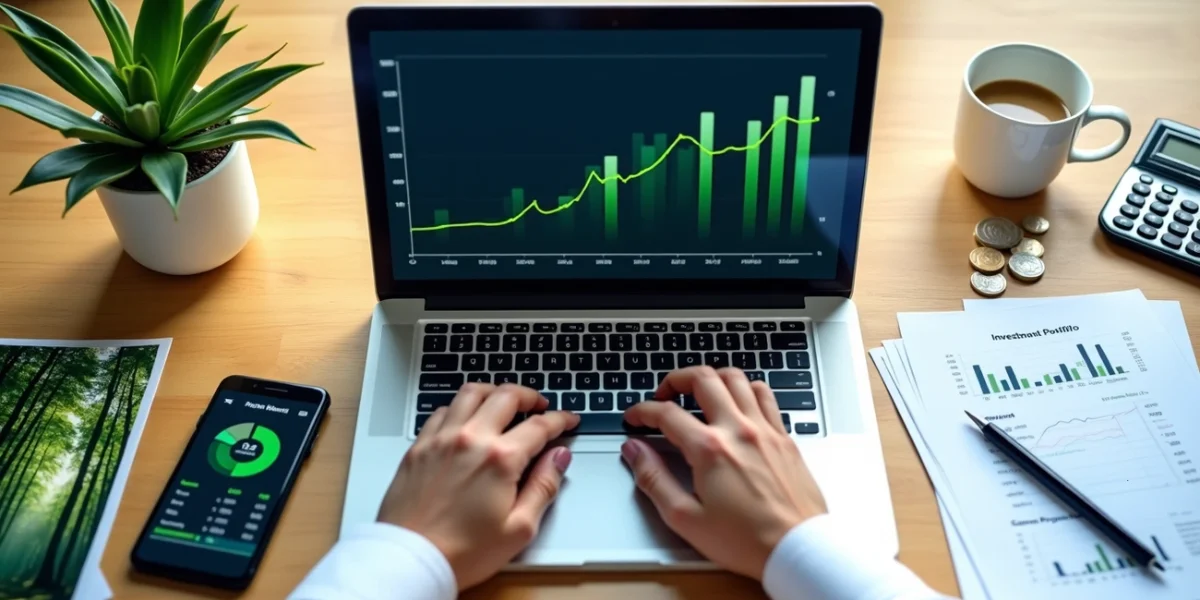
Ongoing monitoring protects investment value. Sylvera’s monitoring tool provides proactive risk alerts and jurisdictional insights tracking over 100 data sources. AlliedOffsets’ platform offers live portfolio tracking, demand forecasting, and profit calculations under varying scenarios. Carbon Direct’s Portfolio Manager centralises contract details, delivery milestones, and payment schedules, particularly crucial for ex-ante credits with complex development timelines.
Different Ways to Invest in Trading Carbon Credits
Trading carbon credits requires selecting an investment method aligned with risk tolerance, capital availability, and desired market exposure. Four distinct pathways offer varying levels of complexity and return potential.
Buying Spot Credits
Spot markets facilitate immediate transactions where carbon credits are purchased with full payment and delivered within days or weeks. These credits are ex-post, meaning the emissions reduction or removal has already occurred and been verified. Buyers receive immediate certainty about environmental impact, as credits can be retired straight away to prove offsetting claims. The spot price reflects current market rates for readily available credits. Transactions occur both on exchanges and over-the-counter markets, involving immediate exchange of assets at agreed-upon prices.
Forward Contracts and Futures
Forward contracts are customisable agreements traded over-the-counter for future credit delivery at predetermined prices. Futures contracts, in contrast, are standardised instruments traded on organised exchanges like CME Group and Intercontinental Exchange. CME Group offers physically settled voluntary carbon futures, including the Core Global Emissions Offset (C-GEO) and Nature-Based Global Emissions Offset (N-GEO) contracts. The ICE Carbon Futures Index Family tracks pricing from the EU ETS, California Cap-and-Trade, RGGI, and UK ETS. These derivatives allow hedging against price volatility whilst providing liquidity through clearinghouses that mitigate default risk.
Direct Project Investment
Investors can provide upfront capital to carbon projects in exchange for priority access to the credits generated, often at discounted rates. Carbon Streaming Corporation exemplifies this model, funding projects to earn rights to fixed portions of future credits, deriving revenue from their subsequent sale. Project developers like Tasman Environmental offer varying investment levels from joint ventures to complete acquisitions.
Exchange-Traded Funds and Stocks
ETFs provide diversified exposure to the carbon market without direct credit management. KraneShares Global Carbon Strategy ETF (KRBN) tracks the S&P Global Carbon Credit Index, covering EU, California, RGGI, UK, and Washington State allowances. The fund’s compliance market focus valued nearly a trillion dollars in 2023. Similarly, KraneShares California Carbon Allowance ETF (KCCA) targets CCA futures, whilst KraneShares European Carbon Allowance ETF (KEUA) focuses exclusively on EU ETS.
Risks and Considerations for Carbon Credit Investors

Despite growth opportunities, carbon credit investments carry substantial risks that require careful consideration.
Delivery and Project Risks
Project implementation delays can significantly impact returns throughout the carbon credit lifecycle. Renewable energy projects face permitting delays, forestry initiatives encounter environmental challenges affecting tree survival rates, whilst direct air capture facilities experience technology integration issues. Credit issuance delays compound these challenges, forcing investors to bear ongoing costs whilst waiting for returns.
Quality and Integrity Concerns
Analysis of over 4,000 carbon offset projects reveals fewer than 10% achieve AAA-A integrity ratings. Similarly, examination of nearly one billion tonnes of carbon credits found less than 16% represented actual emissions reductions. Additionality remains problematic, with credits awarded for protecting areas unlikely to face clearing. Permanence poses challenges, particularly for nature-based solutions vulnerable to wildfires, disease, or land-use changes. Carbon accounting inaccuracies lead to over-crediting when projects claim greater impact than delivered.
Regulatory Changes
Regulatory focus on carbon markets continues intensifying. The CFTC issued VCC derivative guidance in 2024, whilst the ICVCM Core Carbon Principles are reshaping quality standards. Policy shifts can invalidate credits or alter pricing structures, affecting portfolio value.
Price Volatility
Carbon markets experienced notable volatility in 2023, with scrutinised projects witnessing price drops exceeding 50%. External factors, including policy changes, climate conferences, and energy price fluctuations, trigger market shocks.
How to Minimise Investment Risks
Diversification across project types, geographies, and vintages reduces concentration risks. Independent ratings from services like BeZero and Sylvera provide unbiased quality assessments. Rigorous due diligence examining technical feasibility, financial viability, regulatory compliance, and management track records protects investments.
Conclusion – Carbon Credits
Carbon credit investing offers genuine financial opportunities whilst contributing to climate action, yet success depends entirely on thorough research and strategic execution. As a potential investor, understanding project quality, regulatory frameworks, and market dynamics separates profitable investments from costly mistakes.
By carefully vetting projects through independent ratings, diversifying across geographies and credit types, and consistently monitoring portfolios, investors can navigate this growing market effectively.
All things considered, the key to successful carbon credit investing lies in balancing financial returns with genuine environmental impact. Start with smaller positions, build expertise gradually, and scale investments as confidence grows. With proper due diligence and risk management, carbon credits can become a valuable portfolio component.
How can I start investing in carbon credits?
To begin investing in carbon credits, first determine your investment goals—whether to offset emissions or for financial returns. Next, choose between compliance and voluntary markets based on your objectives. Research and vet carbon projects using independent ratings, then select a reputable platform or broker. Finally, establish a registry account if needed, make your first purchase, and monitor your portfolio regularly.
Are carbon credits a worthwhile investment opportunity?
Carbon credits can be a worthwhile investment, offering both financial returns and environmental impact. The market is valued at $851 billion and continues to grow, with Australian ACCU prices potentially doubling to around AUD 114.67 by 2035. However, success depends on thorough research, as fewer than 10% of projects achieve top integrity ratings. High-quality credits typically cost between £15.29 and £76.45 per tonne.
What’s the difference between carbon credits and carbon offsets?
Carbon credits typically represent reductions in greenhouse gas emissions and are created by governments within cap-and-trade systems. Carbon offsets involve removing greenhouse gases from the atmosphere through activities such as reforestation or methane capture. Credits generally trade in compliance markets, whilst offsets primarily trade in voluntary markets. Both represent one tonne of CO2 equivalent but serve different purposes.
Can individual investors purchase carbon credits?
Yes, individual investors can purchase carbon credits through various platforms. The UN Carbon Offset Platform offers free transactions between buyers and certified projects, whilst platforms like Carbonmark provide marketplace access to browse projects by country or type. You can also invest indirectly through carbon-focused ETFs, such as the KraneShares Global Carbon Strategy ETF (KRBN), which provides diversified exposure without direct credit management.
What are the main risks when investing in carbon credits?
Key risks include project implementation delays, quality and integrity concerns (with less than 16% of credits representing actual emissions reductions), regulatory changes that can invalidate credits, and significant price volatility. To minimise these risks, diversify across project types and geographies, use independent ratings from services like BeZero and Sylvera, and conduct rigorous due diligence on technical feasibility and regulatory compliance.