
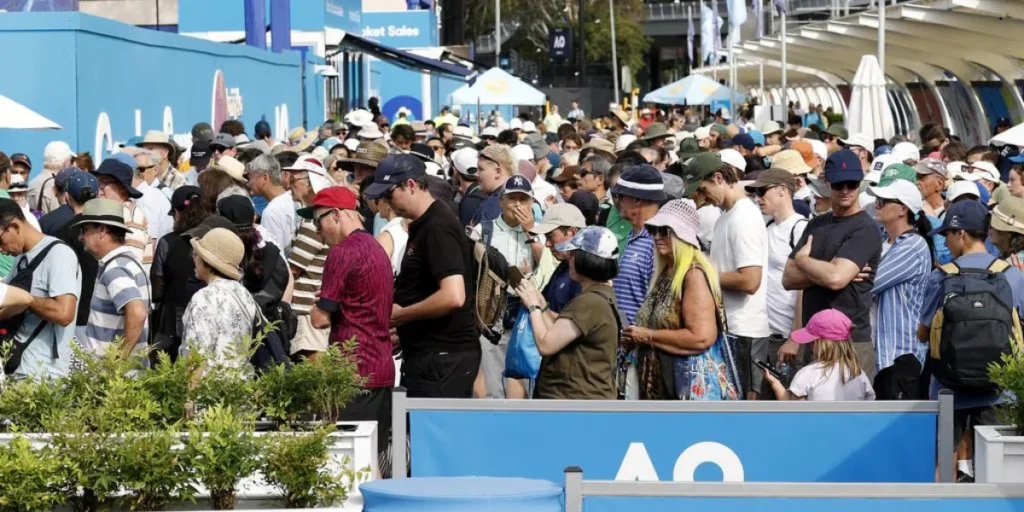
The Australian Open 2026 has shattered attendance records with an impressive 1,150,044 spectators during the main draw, surpassing last year’s figure of 1,102,303. Including the qualifying week, total attendance reached a staggering 1,368,043, up from 1,218,831 in 2025. Furthermore, the event is attracting a younger demographic, with the average age of attendees dropping from 46 to 42 in just two years.
Tennis Australia’s ambitious Australian Open plans include expanding the facilities to accommodate the growing crowds. Tournament director Craig Tiley has proposed a translucent dome over the entire precinct to “climatise the whole space for rain and for heat”. Additionally, the Aus Open 2026 will run from Monday 12 January to Sunday 1 February, offering three weeks of world-class Australian Open tennis and entertainment. Notably, Ground Passes for Opening Week will start at £10 for adults and £5 for youngsters, making them one of the most affordable ways to experience the event. The opening week has already seen tremendous growth, with 217,999 attendees in 2026 compared to only 116,528 during the same period in 2025.
What Changes are Coming to the Australian Open 2026?

Tennis Australia has unveiled extensive upgrades for the Australian Open 2026, transforming the tournament beyond traditional tennis boundaries. The changes span across physical infrastructure, technology integration, entertainment offerings and strategic business initiatives.
Overview of Confirmed Upgrades and Innovations
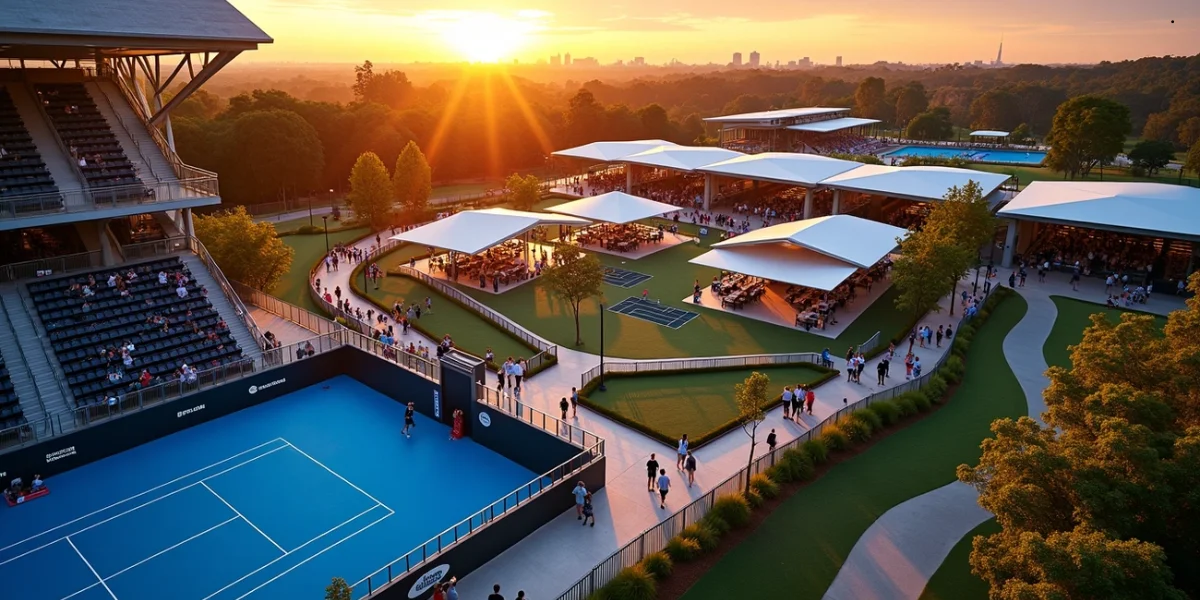
The Australian Open is literally reaching new heights with vertical expansion across Melbourne Park. “For AO 2026, we’re going up, introducing more upper-level, two-storey structures across the precinct,” explained Tennis Australia’s Director of Product and Customer Experience, Amanda Del Prete. The new shaded ‘Highline’ provides elevated views of matches while connecting with the redesigned Courtside Bar that now features grandstand seating. Moreover, Grand Slam Oval has been reimagined with a two-storey fan hub offering additional shade and seating.
On the technology front, Tennis Australia has partnered with Infosys to introduce groundbreaking AI-powered experiences. These include MatchFeel—an accessibility innovation that enables blind and visually impaired fans to follow live tennis via touch—and Rally, a humanoid robot that engages fans with tennis-themed predictions and match insights.
The entertainment offerings have expanded significantly with AO LIVE, a 21-day music festival featuring nightly performances across multiple stages. Another significant addition is the Million Dollar 1 Point Slam, a knockout competition offering AUD 1.53 million prize money for the winner.
Behind the scenes, Tennis Australia’s venture capital arm, AO Ventures, has backed four pioneering early-stage businesses in its first nine months, reflecting its strategy to invest in high-growth opportunities. The USAUD 61.16m fund will make early-stage investments into approximately 20 startup companies worldwide.
Why Tennis Australia is Reimagining the Event
The primary driver behind these changes is the tournament’s burgeoning popularity. With record attendance figures, Tennis Australia acknowledges that they are “bursting at the seams” and needs innovative solutions to accommodate larger crowds comfortably.
However, beyond addressing capacity issues, there’s a deliberate strategy to attract younger audiences. The average age of attendees has already decreased from 46 to 42 in the last two years, with projections indicating it will fall below 40 next year.
According to Tennis Australia’s Chief Commercial Officer Cedric Cornelis, the event has been “diversified into this huge festival on top of the tennis because we know that’s the best way to diversify and grow the fandom for tennis”. This strategy appears to be working—surveys indicate 60% of attendees say they were inspired to start playing tennis or play more after visiting the event.
How will Fans Experience the Australian Open Differently?

For the Australian Open 2026, fan experience takes a significant leap forward with purpose-built structures, streamlined entry systems and an expanded culinary landscape that transforms the tournament into a complete entertainment destination.
New Shaded Areas and Elevated Promenades
The Australian Open 2026 introduces vertical expansion across Melbourne Park, with new two-storey structures throughout the precinct. On the Western Courts, the new shaded ‘Highline’ provides elevated views of matches below while offering much-needed protection from summer heat. This connects seamlessly with the reimagined Courtside Bar, now featuring grandstand seating where fans can “sip, snack and cheer from a prime vantage point”. Beyond these additions, Grand Slam Oval debuts a new two-storey fan hub with extra seating and shade, creating the perfect environment to enjoy both the electric atmosphere and live tennis broadcasts.
Express Entry and Digital Ticketing Improvements
Getting into Aus Open 2026 will be faster and more efficient than ever before. The Express Entry system allows attendees to link a selfie to their Ticketmaster account, enabling face-scanning entry instead of traditional ticket presentation. This biometric authentication technology has been expanded following a limited trial in 2024. Consequently, all tickets for the Australian Open 2026 will be digital, accessible only via the Ticketmaster App, Australian Open App or Ticketmaster.com.au on mobile devices. Three key entry locations—City Entrance, Garden Square Entrance, and Grand Slam Entrance—feature dedicated Express Entry lanes to help fans skip queues.
Expanded Food, Drink and Entertainment Zones
The AO 2026 delivers what Tennis Australia describes as “one of its boldest and most diverse food and beverage offerings yet”. Primarily, this includes the Australian debut of global burger phenomenon Shake Shack. Rather than waiting in lengthy food queues, innovations such as mobile vendors roaming the grounds, expanded in-seat ordering, and new automated snack services ensure fans don’t miss crucial moments. Alongside returning favourites like the Peach Melbourne dessert and Grey Goose Lemon Ace cocktails, the tournament introduces a reimagined express food outlet at Western Courts.
Why Opening Week is Becoming a Major Drawcard
Opening Week has emerged as an essential pillar of the Australian Open 2026 experience, drawing unprecedented crowds to Melbourne Park before the main tournament even begins.
Massive Attendance Growth in Pre-Tournament Week
Opening Week attendance figures highlight its growing popularity, with 217,999 fans attending in 2026 compared to just 116,528 during the same period in 2025. Indeed, this represents an extraordinary 87% year-on-year increase. The week now accounts for 15.9% of total tournament attendance, up from 9.6% in 2025.
Access to Practice Sessions and AO Live Concerts
Fans attending Opening Week gain unique access to top players’ practice sessions, offering rare close-up viewing opportunities as stars prepare for the tournament. Simultaneously, the AO Live music festival delivers performances across multiple stages throughout the precinct, creating a festival atmosphere that appeals particularly to younger audiences.
Affordable Pricing for Families and Young Fans
Above all, the affordability of Opening Week has been crucial to its success. Ground Passes start at just £10 for adults and £5 for children, making it one of the most accessible ways to experience the Australian Open tennis atmosphere. This pricing strategy aligns perfectly with Tennis Australia’s goal of attracting younger fans, contributing to a decline in the average age of attendees from 46 to 42 in just two years.
What Long-Term Vision is Shaping the Future of AO?
Beyond immediate changes, Tennis Australia’s vision extends years into the future with ambitious plans to reimagine the Australian Open experience entirely.
Craig Tiley’s Plan to Climatise the Precinct
Tennis Australia CEO Craig Tiley envisions a revolutionary “translucent dome over the whole precinct” to shield fans from Melbourne’s extreme weather. “We want to climatise the whole thing because why should you buy a ticket for the day, and the heat stops you from having an experience,” Tiley explained. This structure would allow visitors to see the sky and sun without feeling rain or radiant heat, ultimately creating a year-round climate-controlled environment powered by captured solar energy.
Use of Technology to Manage Crowd Flow and Court Access
The future Australian Open will leverage cutting-edge technology to enhance accessibility. Tennis Australia is exploring solutions to prevent fans from “parking themselves in the same spot all day”. Additionally, traditional ticketing booths may become obsolete as biometric identification simplifies entry. Tennis Australia has also partnered with Infosys to develop AI capabilities that make the tournament “more inclusive, informed, and engaging”.
Goal to Inspire New Generations to Play Tennis
Primarily, Tennis Australia aims to grow participation through inspirational events. “These players aren’t just talented – they’re building new fan bases around the world,” noted Tiley. This strategy has proven effective, with ANZ Tennis Hot Shots seeing a 41% increase to 543,850 young participants.
Conclusion – Australian Open 2026
Tennis Australia has undoubtedly transformed the Australian Open into much more than a Grand Slam tournament. The record-breaking attendance of over 1.36 million spectators across the entire event speaks volumes about its growing popularity. Additionally, the vertical expansion across Melbourne Park addresses capacity concerns while providing fans with enhanced viewing experiences through innovations such as the shaded ‘Highline’ and the reimagined Courtside Bar.
Technology stands at the forefront of these changes. Face-scanning Express Entry systems reduce queue times, while AI-powered innovations such as MatchFeel make tennis more accessible to blind and visually impaired fans. Equally impressive, the tournament now features expanded entertainment options with AO LIVE’s 21-day music festival attracting diverse audiences.
The Australian Open 2026 represents not just evolution but rather a complete reimagining of what a tennis tournament can be. Through thoughtful expansion, technological innovation, and strategic focus on accessibility and entertainment, Tennis Australia has crafted an event that simultaneously honours tennis traditions while boldly stepping into the future. The tournament now serves as both a world-class sporting competition and an inspirational gateway for new generations of tennis enthusiasts across Australia and beyond.
What are the major changes coming to the Australian Open in 2026?
The Australian Open 2026 will feature vertical expansion with new two-storey structures, a shaded ‘Highline’ for elevated views, Express Entry with face-scanning technology, expanded food and entertainment zones, and a 21-day music festival called AO LIVE.
How will the fan experience be different at the Australian Open 2026?
Fans will enjoy improved shade and seating options, faster entry through biometric authentication, expanded food and beverage offerings, including mobile vendors and in-seat ordering, and access to practice sessions and concerts during Opening Week.
Why has Opening Week become such a popular part of the Australian Open?
Opening Week has seen massive attendance growth due to affordable pricing (Ground Passes starting at £10 for adults and £5 for children), access to player practice sessions, and the AO LIVE music festival, making it an attractive option for families and young fans.
What long-term vision does Tennis Australia have for the Australian Open?
Tennis Australia aims to ‘climatise’ the entire precinct with a translucent dome, implement advanced crowd-management technology, and inspire new generations to play tennis through engaging experiences at the tournament.