






AI in marketing is revolutionising how brands connect with customers, with 50% of marketing leaders believing it will have a ‘big impact’ on productivity. Additionally, 45% expect improved efficiency, while 38% anticipate greater innovation through the integration of AI. Artificial intelligence in digital marketing has advanced from a futuristic notion to a crucial aspect of modern strategy. Marketers can now focus more on customer needs in real-time, while AI tools analyse competitor campaigns to reveal valuable customer expectations. Furthermore, AI adoption is accelerating rapidly among professionals, with many reporting they “couldn’t live without AI” in their daily workflows.
The impact is already evident in success stories like Sephora, whose e-commerce sales grew from £580 million in 2016 to just over £3 billion, with forecasts suggesting sales of around £3.6 billion in 2024. This growth demonstrates how AI in digital marketing delivers tangible results. Meanwhile, AI systems now handle everything from analytics reporting to drafting social copy and prioritising campaign optimisations, effectively eliminating repetitive work that traditionally slows down marketing teams.
What AI Means for Digital Marketing in 2026?
Artificial intelligence has evolved from an experimental notion to a fundamental pillar of how brands communicate, measure success, and scale their reach in 2026. What began as light experimentation with ad copy generators and simple chatbots following ChatGPT’s launch in 2022 has matured into a robust ecosystem of AI-driven tools now woven into daily marketing workflows.
Understanding AI vs Machine Learning in Marketing
The difference between artificial intelligence and machine learning has been taken out of proportion. In 2026, this understanding has become crucial as 88% of organisations report using AI in at least one business function, up from 78% just one year prior.
AI is a broader concept—a system capable of completing tasks that would typically require human abilities. Machine learning, however, operates as a subset of AI that focuses specifically on:
- Using algorithms to analyse data
- Identifying patterns without explicit programming
- Continuously improving performance through experience
Notably, AI in marketing now processes both structured and unstructured data. Structured data—organised in neat, labelled columns—represents only 20% of what AI uses. The remaining 80% consists of unstructured data: sentiment, commentary, behavioural signals, and more. This capability marks a significant advancement in marketers’ understanding of their audiences.
Moreover, the democratisation of data science has transformed who can leverage AI. As one industry expert notes, “The specialist high-code era of C++ evolved into the low-code era of Python, and in turn, that has now unlocked the no-code age”. Consequently, marketers no longer need programming expertise to build AI models that deliver powerful insights.
Core Functions: Automation, Prediction, Personalisation
By 2026, AI in digital marketing will primarily excel in three core functions that collectively transform marketing operations.
First, automation has become integral to daily workflows. Marketing professionals leverage intelligent dashboards to analyse raw data and deliver instant results. Routine tasks, such as monitoring engagement analytics and CRM updates, are automated, allowing teams to focus on creative and innovative strategies. Indeed, this shift affects the entire working environment—less time spent on management and control, more on interpretation and message development.
Second, predictive analytics has fundamentally changed decision-making. AI systems analyse extensive historical performance data and behavioural patterns to identify which campaigns are most likely to succeed. This approach helps reduce ad spending, as marketers can allocate funds to the most responsive audiences rather than spreading resources evenly. The result is better spending and a substantially higher return on investment.
Third, personalisation at scale has become the standard expectation. In 2026, buyers expect personalised touches at every stage of their journey. AI makes this possible by crafting tailored messages for different groups without manual intervention. As one report states, “AI makes sure that every piece of content feels personal, not generic… The end result is communication that grows without sounding robotic, which was almost impossible to achieve a few years ago”.
Perhaps most significantly, AI enables what marketers call “personalisation at scale“—the ability to deliver distinct content to each customer segment at a moment’s notice. This is achieved through AI marketing strategies that centralise data, analytics, and campaign orchestration, empowering teams to deliver relevant messages without the burden of manual segmentation.
Nevertheless, it’s worth noting that AI functions as both a helpmate and an accelerator, enhancing human creativity rather than displacing it. The real challenge for marketers in 2026 isn’t adopting AI but mastering the balance between automation and authenticity.
Related Article: AI Challenges Explained: The Biggest Issues Facing Artificial Intelligence Today
Strategic Role of AI in Marketing Teams
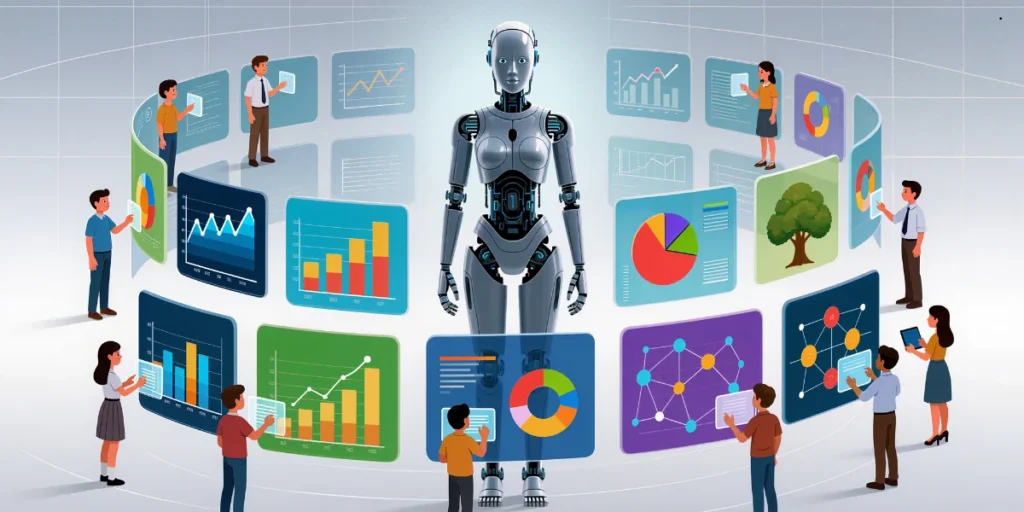
In 2026, marketing teams are experiencing a profound structural shift, with AI becoming central to their operational effectiveness. The role of marketers has evolved from manual operators to strategic orchestrators, as artificial intelligence takes over the execution burden that once consumed most of their working hours.
Reducing Manual Workload for Lean Teams
Marketing professionals typically spend 60% of their time on tasks that computers can handle more efficiently. This reality has prompted a significant operational transformation, with AI-powered marketing teams now achieving 80% productivity improvements across their workflows. For lean teams with limited resources, this shift is particularly valuable.
The impact extends beyond mere efficiency—companies implementing marketing automation see a remarkable 451% increase in qualified leads. This occurs primarily because AI takes over repetitive tasks such as data entry, scheduling, and standard reporting. As one industry report notes, automation software increases sales productivity by 14.5% whilst simultaneously reducing marketing overhead by 12%.
Essentially, AI brings unprecedented speed and scalability to small marketing teams. Tasks that previously required weeks of manual research—like analysing market trends or customer behaviour—can now be completed in minutes. By 2026, AI is predicted to automate roughly 30% of marketing work hours, freeing up experts to focus on the more important aspects of their roles.
AI-powered Decision-Making from Live Data
The evolution of AI decisioning represents one of the most substantial changes in marketing operations. These systems have moved well beyond predictive scoring and simple rules-based workflows to become robust systems of interconnected decisions. Today’s AI in marketing platforms make increasingly complex decisions about audience selection, channel routing, send-time optimisation, and creative selection—often at a scale impossible for human teams to manage manually.
According to industry experts, marketers are increasingly relying on AI to reduce guesswork and guide their next moves. This shift is particularly evident in:
- Real-time optimisation during campaigns rather than post-campaign analysis
- Performance interpretation that surfaces insights that might otherwise be overlooked
- Adaptive customer journeys that continuously adjust based on behaviour
By letting AI handle decisions that once consumed hours of manual setup, marketing teams reclaim valuable time for strategy and experimentation. In 2026, conversational AI has effectively become the operating layer for marketing—the primary way people interact with data, systems, strategy, and execution.
Indeed, the first catalysts for this transformation are agentic AI systems that can move from simply answering questions to taking independent action. Instead of analysing dashboards, marketers can now speak their intent, and AI translates that into real-world outcomes.
Faster Campaign Execution with Automated Testing
Among the most widely adopted AI-driven marketing capabilities, automated A/B testing has transformed how campaigns are optimised. Advanced AI testing tools like LINK AI can process high volumes of creative simultaneously, enabling teams to test more advertising assets than ever before.
The pace is unparalleled; data are delivered to user-friendly analytics dashboards in as little as 15 minutes, enabling marketers to start campaigns with greater confidence and make fast go/no-go decisions. Furthermore, AI testing algorithms predict which variation will win, enabling teams to implement changes without waiting for complete test cycles to conclude.
During campaigns, AI adjusts content, timing, and strategy in real time. Unlike traditional approaches where marketers manually map every possible journey, machine learning models now recognise behavioural patterns, predict outcomes, and decide what happens next—all in real time. This dramatically reduces manual work, improves agility, and makes personalisation at scale possible without rebuilding every journey from scratch.
For paid media particularly, AI has shifted from manual optimisation to model-driven systems. As one expert explains, “Your paid marketers job becomes way less about individual campaigns and manual tuning and more about designing end-to-end experiences that AI can operate”. This approach allows teams to test 40-50 variations of an image or video ad for the cost of producing just one.
AI Tools by Function: Content, Ads, Analytics, CX
Modern marketing teams rely on a suite of AI-powered tools to execute their strategies across various functions. These specialised solutions enable marketers to implement artificial intelligence throughout their operations with unprecedented precision and scale.
Jasper and Copy.ai for Content Generation
Content creation tools have evolved from simple text generators to sophisticated AI platforms that understand brand voice and marketing objectives. Jasper employs advanced language models like GPT-4 to produce high-quality content across formats, including blog posts, social media content, and ad copy. Marketing teams using Jasper Reports increased efficiency and productivity as the platform accelerates content creation while maintaining quality and consistency.
Similarly, Copy.ai has emerged as a GTM (Go-to-Market) AI Platform designed to automate content marketing processes. The platform leverages machine learning to generate engaging, on-brand content for various formats. Research indicates that 58% of marketers using generative AI report increased content performance, whilst 54% see cost savings. Copy.ai‘s recent developments include Content Agents, which generate content based on learning models trained on user examples, and AI Workflows, which optimise repetitive processes such as email and blog drafting.
Revealbot and Meta Advantage+ for Ad Automation
In the realm of advertising, automation tools have fundamentally transformed campaign management. Revealbot offers what many consider the most flexible and powerful ad automation for Facebook, Google, and Snapchat ads. Through its advanced automated rule constructor, it enables 24/7 campaign optimisation. The platform can automatically pause or boost ads, adjust budgets and bids based on any conditions marketers choose, and execute these adjustments as frequently as every 15 minutes.
Meta Advantage+, in contrast, represents Meta’s end-to-end automation system for performance marketers. It employs machine learning for several critical functions:
- Real-time decisions about audience targeting
- Optimal ad placements across platforms
- Dynamic budget allocation
- Creative performance assessment
The flagship format, Advantage+ sales campaigns (ASC), combines prospecting and remarketing into a single automated campaign, allowing marketers to upload their catalogue and creative assets without manual segmentation simply.
Looker Studio and HubSpot AI for Reporting
Analytics tools have incorporated AI to transform raw data into actionable insights. Looker Studio (formerly Google Data Studio) enables users to connect to various data sources through more than 600 partner connectors, creating interactive dashboards and compelling reports. Its intuitive drag-and-drop editor features customisable property panels and a snap-to-grid canvas, making data visualisation accessible to non-technical users.
HubSpot AI has integrated artificial intelligence into its reporting functions through Breeze, its collection of AI tools. Users can now create custom reports by simply entering a phrase or question that summarises their reporting goal. The system generates a report template with recommended filters and data visualisation. Additionally, HubSpot’s AI Insights feature analyses report data to generate concise summaries and takeaways, helping marketers identify patterns and opportunities without manual analysis.
Drift and Intercom for Customer Engagement
Customer experience platforms now leverage AI to enhance engagement throughout the buyer journey. Drift’s AI Chat agent engages website visitors with real-time personalised conversations, delivering better buyer experiences and generating more qualified leads. The system intelligently routes qualified buyers to sellers and provides context for personalised, timely communication. In fact, companies using Drift have reported significant improvements across all stages of the buyer’s journey.
Intercom’s Customer Service Suite combines an AI Agent, Fin, with a next-generation helpdesk. Fin handles most customer queries, resolving complex issues and referring to human agents when necessary. Teams using Intercom’s AI-powered tools, such as Copilot, have achieved remarkable efficiency gains—agents using Copilot closed 31% more customer conversations daily than those not using the tool. This integration of AI and human support creates a feedback loop where the system continuously improves performance, making support more accurate, consistent, and effective over time.
Real-World Use Cases of AI in Digital Marketing

The real-world impact of artificial intelligence is readily apparent across the digital marketing landscape in 2026. Practical applications of AI demonstrate its value beyond theoretical benefits, with organisations reporting tangible improvements in performance across multiple domains.
AI in SEO
AI-powered keyword clustering has become a cornerstone of effective SEO strategies. This technique uses machine learning and natural language processing to group related keywords by semantic relevance, creating comprehensive content hubs that target multiple search intents simultaneously. One travel website that implemented AI keyword clustering for European vacation destinations saw a 30% increase in organic traffic within 6 months.
The process involves three key steps:
- AI analysis of thousands of keywords relevant to a specific niche
- Semantic grouping based on contextual similarities rather than just search volume
- Creation of strategic content architecture with main articles and supporting posts
Beyond keyword organisation, AI content scoring has emerged as a pivotal technique for optimising content for search engines. This method evaluates content using artificial intelligence to predict SEO performance and audience engagement. According to industry research, 78% of marketers report that AI-based scoring tools have improved content quality by helping teams identify what to update, improve, or remove.
Content scoring algorithms assess multiple factors, including readability, keyword relevance, semantic analysis, originality, and user engagement signals. Brands using AI scoring to prioritise content updates report 45% higher organic traffic growth.
AI in Paid Media
In the realm of paid advertising, AI has transformed budget allocation decisions through advanced media mix modelling. Currently, 56% of marketers cite optimising media mix and budget allocation as a primary use case for AI in their analytics stack. This approach enables marketers to quantify the actual marginal impact of different channels and reallocate budgets based on data-driven insights.
Through AI-powered budget planning, marketing teams can structure spending strategically, avoiding the inefficiency of spreading small budgets too thinly across multiple campaigns. For performance marketers, the most useful setup is to cluster spend into meaningful search groupings, such as branded vs. non-branded search, competitor terms, and long-tail problem queries.
Equally important, creative testing has evolved dramatically through the implementation of AI. With brands running numerous different ads simultaneously, traditional panel-based testing methods have become impractical.
AI in Customer Experience
Customer experience has been profoundly enhanced through AI-powered chatbots. These conversational interfaces streamline customer inquiries, answer questions, and guide users through processes without human intervention. According to the IBM Institute for Business Value, 71% of executives aim to automate customer support inquiries fully by 2027.
The evolution from simple chatbots to intelligent AI agents represents a shift from automating responses to automating outcomes. Researchers at Harvard Business School analysed more than 250,000 chat conversations and found AI chatbots reduced response time by 22% and improved customer sentiment by as much as 1.63 points.
In parallel, email personalisation has been revolutionised through AI algorithms that dynamically customise email content for each recipient. This technique analyses historical email data, website behaviour, firmographic data, and social media profiles to insert personalised content and messaging. The results are compelling—personalised emails have open rates that are 26% higher and response rates that are 29% higher than generic bulk emails.
One marketer reported that their A/B testing improved tenfold with generative AI in email marketing, enabling testing not only of subject lines but also of user behaviour. Besides increasing engagement, AI email personalisation provides significant efficiency gains, with reports suggesting companies leveraging this technology grow revenue 29% faster on average.
Benefits of AI for Marketing Performance

The measurable impact of AI in marketing extends far beyond theoretical benefits. Companies implementing AI in marketing strategies experience, on average, 40% higher revenue than competitors still using traditional approaches.
Scaling Personalisation without Increasing Headcount
AI resolves the age-old challenge of delivering personalised experiences at scale without expanding team size. Despite 80% of consumers being willing to purchase from brands that offer tailored experiences, most companies previously struggled to implement them. Through AI personalisation, marketers can now:
- Generate content tailored for micro-segments or even individual customers
- Analyse multiple data sources to predict what customers require next
- Deliver unique experiences across channels simultaneously
This shift yields impressive results, as AI-powered personalisation drives 50 times faster content generation than manual approaches. Subsequently, AI enables marketers to transcend the limits of manual interactions whilst maintaining authentic connections.
More Innovative Content Production with Brand Consistency
AI fundamentally transforms how brands maintain consistency as content volumes grow. Automated evaluation systems catch inconsistencies that would otherwise require manual review of every asset. Through proper AI training with brand-specific data and robust templates, organisations ensure uniform messaging regardless of production scale.
The benefits extend beyond quality control—AI frees creative talent to focus on strategy rather than routine corrections like fixing colour codes or adjusting logo placement. Despite common concerns, AI content generation effectively maintains brand voice whilst adapting to different audience segments.
Operational Efficiency Across Marketing Channels
Across channels, AI eliminates time-consuming processes that traditionally slow down marketing teams. Marketing professionals typically spend 60% of their time on tasks that computers handle more efficiently. Accordingly, teams leveraging AI report workflow productivity improvements of up to 80%.
Better Budget Allocation through Real-Time Insights
Perhaps most critically, AI transforms financial decision-making by optimising budget allocation in real-time. The technology continuously evaluates performance data and projects potential returns, ensuring resources flow to the most profitable channels. Hence, organisations achieve notable gains in operational effectiveness and market responsiveness. Above all, AI’s rapid response mechanism detects underperforming assets almost immediately—sealing financial leaks before they cause significant losses.
Conclusion – AI in Marketing
Artificial intelligence has fundamentally transformed digital marketing as we approach 2026. Though initially considered experimental, integration of AI is now an essential component of modern marketing strategies, handling everything from content generation to budget optimisation. The shift from manual processes to AI-assisted workflows allows marketing teams to accomplish more without expanding headcount, essentially creating a new operational paradigm where professionals focus on strategy rather than routine tasks.
Companies embracing AI in marketing report substantial benefits, including 40% higher revenue compared to competitors using traditional approaches. These results stem from AI’s ability to deliver personalisation at unprecedented scale, maintain brand consistency across growing content volumes, and allocate resources to the most effective channels through real-time data analysis.
As AI evolves, its role in marketing will undoubtedly expand. Nevertheless, the fundamental purpose remains unchanged – connecting brands with customers through relevant, timely, and meaningful interactions. The integration of AI simply makes this possible at greater speed and scale than ever before.
How is AI transforming digital marketing in 2026?
AI is revolutionising digital marketing by automating routine tasks, enabling personalisation at scale, and providing real-time insights for better decision-making. It’s allowing marketers to focus on strategy while AI handles execution, resulting in improved efficiency and performance across various marketing functions
What are some key tools used in AI in digital marketing?
Some key AI tools in digital marketing include Jasper and Copy.ai for content generation, Revealbot and Meta Advantage+ for ad automation, Looker Studio and HubSpot AI for reporting and analytics, and Drift and Intercom for customer engagement and support.
What are the benefits of using AI in marketing?
AI in marketing offers several benefits, including the ability to scale personalisation without increasing headcount, smarter content production with brand consistency, improved operational efficiency across marketing channels, and better budget allocation through real-time insights.
How is AI improving SEO and paid media strategies?
AI is enhancing SEO through advanced keyword clustering and content-scoring techniques, driving improved organic traffic. In paid media, AI is revolutionising budget reallocation and creative testing, enabling more efficient ad spend and better performance prediction across ad creatives.