






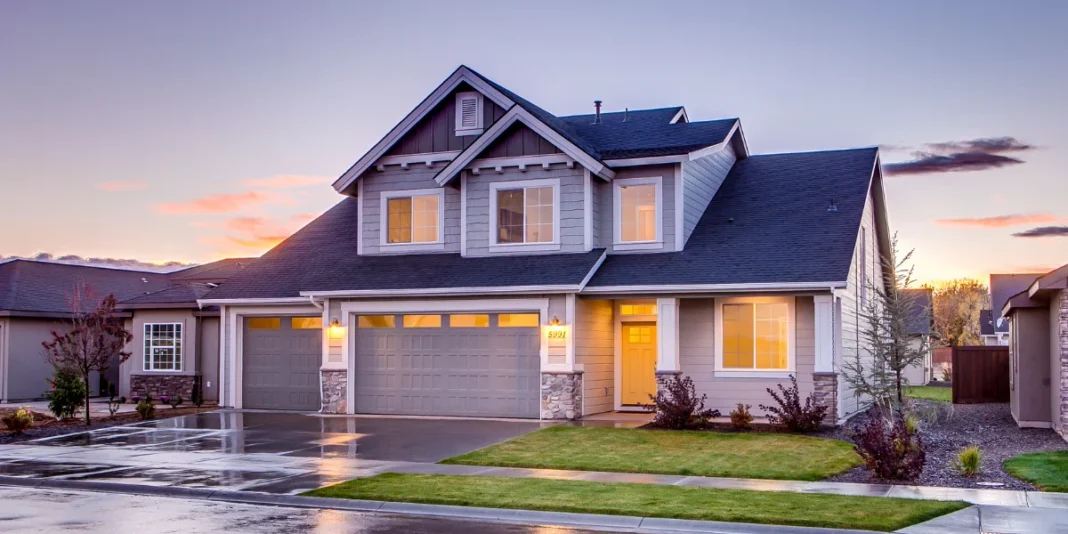

Property depreciation offers investors a significant tax advantage, allowing them to offset the decline in value of their investment property against their taxable income. During the last financial year, residential property owners claimed an average first-year deduction of almost £9,000. Actually, this tax break works by gradually accounting for the wear and tear, age, and obsolescence that naturally occur with buildings over time.
For investors, understanding how depreciation works can substantially improve their financial position. Generally, rental property depreciation follows specific rules, with properties allotted a recovery term of 27.5 or 30 years under the Modified Accelerated Cost Recovery System. Furthermore, these claims typically fall into two main categories: Capital Works Allowance and Plant and Equipment Depreciation. Specifically, owners can claim depreciation on capital works at a rate of 2.5% for up to forty years, provided the property was built after 15 September 1987. This guide will explore the mechanics of property depreciation, its various types, and why it remains one of the most valuable tax benefits for property investors.
Related Article: Protecting Your Rental: A Guide to Investment Property Insurance in Australia
What is Property Depreciation and How Does It Work?
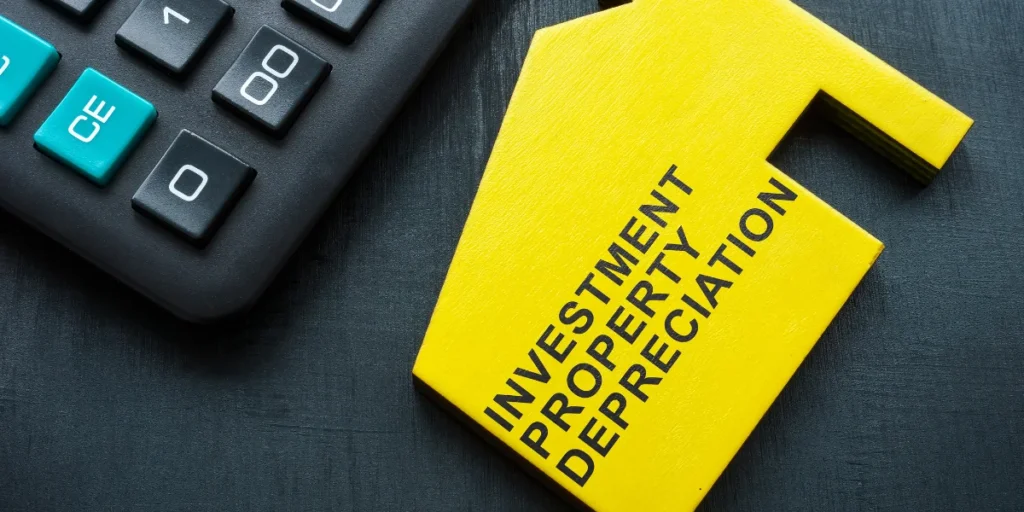
Understanding property depreciation requires grasping a fundamental concept: as buildings age, they deteriorate. The Australian Taxation Office (ATO) recognises this decline in value and offers property investors the ability to claim this depreciation as a legitimate tax deduction. This crucial financial tool can substantially improve investment returns when properly utilised.
Depreciation in Real Estate
Property depreciation refers to the accounting method that measures the gradual decrease in value of an investment property’s structure and assets over time due to wear and tear, age, and obsolescence. Unlike many other tax deductions, depreciation is a “non-cash deduction,” which means that investors do not have to spend money on a regular basis to claim it—the deductions are built into the property’s original price.
When investors purchase property, tax authorities treat the transaction as buying both a building and various separate depreciating assets. These assets fall into two distinct categories:
- Capital Works Allowance (Division 43) – This covers the structure and permanent fixtures of the building, including:
- Walls, roofs, and floors
- Built-in kitchen cupboards
- Bathroom fixtures like tubs and toilet bowls
- Doors and windows
- Electrical wiring and plumbing
Owners of residential properties built after September 15, 1987, can deduct capital expenses at a 2.5% annual rate for up to 40 years. This translates to claiming the entire construction cost over 40 years.
- Plant and Equipment Depreciation (Division 40) – This category encompasses removable or mechanical items with a limited lifespan:
- Carpets and floating timber floors
- Blinds and curtains
- Appliances (ovens, dishwashers, etc.)
- Air conditioning units
- Hot water systems and smoke alarms
The ATO assigns an individual effective life and depreciation rate to each plant and equipment asset. The effective life essentially represents the period during which the asset can be used to produce income before it wears out.
Property investors should note that legislative changes in 2017 affected depreciation claims. Deductions for previously used plant or equipment assets are not available to owners of used residential properties who exchanged contracts after 7:30 p.m. on May 9, 2017. Nevertheless, investors who purchase brand-new residential properties, substantially renovated properties, or add new plant and equipment assets to a second-hand residential property can still claim substantial depreciation deductions.
Land vs Building Value
A critical principle for property investors to understand is that land and buildings behave differently from an investment perspective. The golden rule is straightforward: land appreciates while buildings depreciate.
Land tends to increase in value over time because:
- It’s a finite resource (they’re not making any more of it)
- Population growth creates greater demand
- Development and infrastructure improvements enhance desirability
Buildings, on the other hand, deteriorate with age, resulting in:
- Increased maintenance costs
- Outdated design and functionality
- General wear and tear reduces aesthetic appeal and structural integrity
This distinction is not merely theoretical—it has significant financial implications. Historical data show that land value alone has increased at approximately double the rate of combined house and land prices. Consequently, savvy investors pay close attention to the land-to-asset ratio when evaluating potential investments.
Consider this example: A brand-new house built today for £305,798 will not maintain this value over time. In 50 years, the building might be completely worthless and ready for demolition. This explains why older properties are sometimes described as having “just land value”—the building component has depreciated so significantly that the land now represents the majority of the property’s worth.
Australian tax law acknowledges this reality by stating that a building has a theoretical life of 40 years, after which it needs replacement. This principle forms the basis for the 2.5% annual depreciation rate allowed for capital works.
When considering investment options, the land content ratio becomes crucial. Medium-density housing with good land content typically outperforms apartments over the long term because apartments contain tiny land per unit. As a rule of thumb, the total floor area of all buildings should ideally be less than the land area to maximise appreciation potential.
When Depreciation Starts and Ends
The depreciation clock starts ticking from a specific point in time and continues for a defined period, following strict guidelines set by the ATO. Understanding these timeframes is essential for claiming appropriate deductions.
For capital works (Division 43), the following rules apply:
- Properties built before 18 July 1985 are not eligible for capital works deductions
- Properties built between 18 July 1985 and 26 February 1992 may qualify for deductions at rates between 2.5% and 4%
- Properties built after 15 September 1987 generally qualify for the standard 2.5% annual deduction over 40 years
For plant and equipment items (Division 40), depreciation begins when you first use the asset or install it ready for use—regardless of whether it’s for private purposes or to earn assessable income. However, any deduction must be reduced to account for private use of the asset.
The ATO provides two methods for calculating depreciation on plant and equipment:
Prime Cost Method (Straight Line) – This approach claims a fixed percentage of the original value throughout the asset’s effective life. The formula applies a consistent deduction annually, spreading the cost evenly across the asset’s lifespan.
Diminishing Value Method – This method implies that the annual drop in value is a constant proportion of the remaining value, resulting in smaller deductions over time. It allows for higher deductions in the early years of ownership.
For depreciating assets costing more than £458.70, investors can claim deductions over the asset’s effective life using either the Commissioner’s determined effective life or their own reasonable estimate. Assets worth £458.70 or less can be claimed as an instant deduction in the income year in which they were used for a taxable purpose, unless they are part of a group of assets that total more than this amount.
To illustrate how depreciation calculations work in practise, consider a property with construction costs of £382,247.56. Using the typical 2.5% depreciation rate for capital works, the owner might claim £9,556.19 each year for 40 years from the date of building completion.
Similarly, an asset purchased for £2,293.49 with an effective life of 5 years, using the diminishing value method, would generate a first-year deduction of £917.39, calculated as follows: £1,500 × (365 ÷ 365) × (200% ÷ 5).
Depreciation claims continue until either:
- The full construction cost has been claimed (typically after 40 years for buildings)
- The asset has been disposed of, destroyed, or is no longer used to generate income
- For plant and equipment, when the item reaches the end of its effective life
For older properties already approaching or past the 40-year mark from their construction date, depreciation benefits diminish significantly. After 40 years, the property is typically considered to have completely depreciated for tax purposes.
Investment property owners should obtain a tax depreciation schedule prepared by a qualified quantity surveyor to maximise their allowable deductions. This professional report outlines every depreciation deduction available throughout the property’s lifetime and ensures compliance with ATO requirements.
Types of Property Depreciation Explained
Beyond the tax classifications discussed earlier, property depreciation also occurs through four distinct types of obsolescence. Each type represents a different mechanism through which buildings lose value over time. Understanding these depreciation categories helps investors anticipate how their assets may perform in the long term and identify potential opportunities for renovation and improvement.
Physical Obsolescence: Wear and Tear
Physical obsolescence refers to the natural deterioration that occurs in all built structures over time. This form of property depreciation is perhaps the most visible and straightforward to understand. As buildings age, their components gradually deteriorate, resulting in a decline in both functionality and appearance.
The primary characteristics of physical obsolescence include:
- Deteriorating building materials (roof, walls, floors)
- Systems breakdown (plumbing, electrical, HVAC)
- General decline in structural integrity
- Aesthetic degradation of fixtures and finishes
Physical obsolescence is inevitable in all property investments. Even buildings constructed with premium materials eventually show signs of wear and tear. For instance, a house built many decades ago will, without major renovations, deteriorate to a state inferior to its original condition.
Notably, physical obsolescence can be classified as either “curable” or “incurable” based on the economics of potential repairs:
Curable physical obsolescence occurs when the cost of fixing the issue is less than the value added by the repair. These are typically maintenance issues that can be addressed through standard upkeep, such as repainting walls or replacing worn carpeting.
Incurable physical obsolescence happens when remedying the issue would cost more than the resulting increase in property value. Alternatively, it applies when deterioration has progressed beyond repair, such as in cases of foundation problems or widespread structural damage.
Prudent investors establish maintenance schedules and set aside replacement funds to manage physical obsolescence proactively. Over the past two decades, advancements in construction techniques and materials have influenced depreciation rates, potentially accelerating them as newer properties incorporate more sophisticated features.
Functional Obsolescence: Outdated Design
Functional obsolescence refers to the decline in property value resulting from outdated design characteristics that no longer align with current market standards. Unlike physical obsolescence, a property can suffer from functional obsolescence even when perfectly maintained.
This type of depreciation occurs when:
- Floor plans no longer meet contemporary needs
- Design elements appear dated or impractical
- Systems and features lack modern capabilities
- The property contains inadequate amenities
A classic example is a 1950s house with three bedrooms and one bathroom in a community dominated by new two-story homes with five bedrooms and four bathrooms. Since the older house lacks what current buyers expect, it becomes functionally obsolete despite potentially being in excellent condition.
Functional obsolescence also encompasses “superadequacy”—a counterintuitive concept where over-improvements actually decrease value. For instance, installing an indoor swimming pool might make a property less desirable if most buyers consider it too costly to maintain.
Assessment of functional obsolescence remains primarily subjective, as various factors influence price decisions. Nonetheless, appraisers typically categorise functional obsolescence as:
Curable functional obsolescence: Flaws that can be remedied relatively easily through renovation or updating. Examples include outdated kitchen appliances or inefficient bathroom layouts.
Incurable functional obsolescence: Design issues that cannot be practically fixed, such as a house with an unconventional design where the primary entrance faces away from the street, contrary to neighbouring homes’ orientation.
For investors, identifying functionally obsolete properties can present opportunities. Properties requiring cosmetic updates rather than structural changes often offer strong return potential through targeted renovations that align with current market preferences.
External Obsolescence: Location and Economy
External obsolescence (sometimes referred to as locational obsolescence) differs fundamentally from both physical and functional obsolescence, as it stems from factors outside the property itself. This type of depreciation occurs when external influences negatively impact a property’s value, regardless of the building’s condition or design.
External obsolescence typically originates from:
- Changes in the surrounding neighbourhood
- Shifts in local economic conditions
- Environmental impacts or natural hazards
- Infrastructure developments affecting liveability
For example, a property located near a newly constructed landfill, noisy airport, or busy highway intersection would likely experience external obsolescence due to these proximity factors. Similarly, homes built too close to factories or in areas with high unemployment rates face decreased desirability.
A particularly challenging aspect of external obsolescence is that it’s generally incurable from the property owner’s perspective. Since the causal factors exist outside property boundaries, owners have limited or no control over them. For instance, if flight paths are altered to bring aircraft directly over a previously quiet residential area, the resulting noise pollution may significantly reduce property values, with no practical solution available to owners.
This type of depreciation especially highlights the real estate adage that when buying property, you’re also buying the neighbourhood. External factors outside the property lines can substantially impact investment returns, sometimes more dramatically than the property’s intrinsic characteristics.
Economic Obsolescence as a Subset of External

Economic obsolescence represents a specific category of external obsolescence, focusing primarily on market-based and economic factors. While closely related to external obsolescence, economic obsolescence refers explicitly to how broader economic conditions impact property value.
Key triggers of economic obsolescence include:
- Recessions or economic downturns
- Changes in zoning laws or building regulations
- Oversupply of similar properties in the market
- Declining population or demographic shifts
- Loss of major employers in the area
Economic obsolescence is defined as “the loss of value resulting from external economic factors to an asset or group of assets”. Unlike physical depreciation that occurs gradually, economic obsolescence can happen suddenly—for instance, when a major employer closes, triggering population decline and reduced housing demand.
At its core, economic obsolescence manifests as a property’s reduced profit margin or diminished potential return on investment. If a property can no longer generate sufficient income to provide an adequate return relative to its value, economic obsolescence becomes apparent. This phenomenon is particularly relevant for commercial properties where income potential directly affects valuation.
Measuring economic obsolescence often involves comparing current market conditions with those that existed when the property was developed. Properties experience economic obsolescence when market circumstances change unfavourably, creating a mismatch between the property’s attributes and market demands.
For instance, consider an office building designed during the era of paper filing systems with minimal technological infrastructure. As businesses evolved toward digital operations that require extensive connectivity, properties lacking these capabilities experienced economic obsolescence, despite being physically sound.
Investors should note that economic obsolescence, like other forms of external obsolescence, typically remains incurable from the individual property owner’s perspective. At most, owners can attempt to reposition properties through adaptive reuse or substantial redevelopment if economically viable. Primarily, economic obsolescence serves as a crucial reminder that property investments remain vulnerable to broader market forces beyond individual control.
Conclusion – Property Depreciation
Property depreciation remains one of the most valuable yet often overlooked tax advantages available to property investors. Throughout this guide, we have explored how buildings naturally lose value over time, creating legitimate tax deductions that can significantly improve investment returns.
First and foremost, understanding the distinction between land and buildings proves essential. Land typically appreciates over time due to its finite nature, whereas buildings deteriorate regardless of the quality of maintenance. This fundamental principle explains why the Australian Taxation Office allows investors to claim depreciation deductions over the property’s lifetime.
The two main categories—Capital Works Allowance and Plant and Equipment Depreciation—offer different benefits. Capital works deductions apply to the building structure at a rate of 2.5% annually over 40 years, whereas plant and equipment items depreciate according to their individual effective lives. Consequently, newer properties generally provide greater depreciation benefits than older ones. Property depreciation thus represents not merely an accounting concept but rather a powerful financial tool that transforms the natural ageing process of buildings into significant tax benefits, ultimately enhancing investment returns and building long-term wealth.
How does property depreciation benefit real estate investors?
Property depreciation allows investors to deduct the wear and tear of their investment property from their taxable income. This can significantly boost cash flow and maximise long-term profits by reducing the overall tax burden.
Is claiming depreciation on a rental property worthwhile?
Yes, claiming depreciation on a rental property is highly beneficial. It can lead to substantial tax deductions, potentially reducing your taxable income by thousands of pounds in the first year alone, depending on your tax bracket and the property’s value.
Are there any drawbacks to claiming depreciation on rental property?
The main drawback is the potential for a recapture tax when you sell the property. This means you may need to pay back some of the tax benefits you’ve received from depreciation claims over the years.
How long can property investors claim depreciation?
For residential properties built after 15 September 1987, investors can typically claim capital works depreciation at a rate of 2.5% per year for up to 40 years. Plant and equipment items have varying depreciation periods based on their effective lives as determined by tax authorities.