








With 55% of Australian adults working side hustles in their free time, the highest paying side hustles Australia 2026 are garnering unprecedented attention. Indeed, many Australians are building multiple income streams through the gig economy and remote work, rather than relying solely on traditional employment. Moreover, artificial intelligence is reshaping how these side hustles operate, creating new opportunities for higher earnings. This article explores seven side hustles Australia has to offer in 2026, examining how AI is transforming each opportunity and what it takes to succeed.
AI-Enhanced Freelance Services

Freelance platforms have undergone a dramatic shift in the past two year. According to recent research, 82% of freelance platforms now incorporate AI-powered features. This transformation has created a clear divide in the marketplace: freelancers who integrate AI into their workflows and those competing against it.
What AI-Enhanced Freelancing Involves
AI-enhanced freelancing means using artificial intelligence tools to augment traditional freelance services rather than replacing human expertise. The work spans across multiple categories, from AI-accelerated research and proposal writing to workflow automation and client management. Freelancers currently spend between AUD 76.45 and AUD 229.35 per month on AI tools, treating these platforms as productivity partners rather than replacements for their skills.
The shift has been rapid. Analysis from February 2026 showed that demand for AI-enhanced freelancing skills grew 109% year-over-year. AI video generation and editing has become the fastest-growing skill category on major platforms. According to this research, clients no longer just inquire, “Can you do the job?” but rather “Can you do the job faster, smarter, and at the level of someone who know how to use AI?”
Income Potential in Australia
Freelancers with AI augmentation now make significantly more money than those with traditional approaches. Recent platform data indicates that freelancers offering AI-enhanced services earn 25% more per hour compared to peers without AI integration. Freelancers report landing their first automation projects at rates between AUD 76.45 and AUD 152. 90 per hour in 60 days after acquiring these skills.
The work scales well. The client often pays setup fees plus monthly retainers for maintenance, creating recurring revenue streams. Freelancers who land their first basic automation project at AUD 76.45 per hour can achieve this milestone within 30 day of acquiring foundational skills. The key factor driving higher rates is not technical complexity but the ability to demonstrate measurable business outcomes.
How AI Is Transforming This Side Hustle
Three core AI skills have emerged as differentiators in the freelance market. First, AI-accelerated research allows freelancers to feed single prompts into tools like ChatGPT and Perplexity to gather industry insights, competitor gap, and proposal personalisation that previously required three to four hours of manual work. Second, AI-enhanced output involves using generative AI tools as a creative multiplier to generate multiple draft versions, transform one blog post into various formats, and build frameworks on autopilot. Third, workflow automation using Zapier, Notion AI, and AI-powered CRM systems removes tasks that slow down business operations.
This shift has redefined client expectations. A survey found that 73% of freelancers globally now use generative AI tools in some capacity. The market is not asking for AI experts but for problem solvers who use AI as one tool among many. Freelancers who combine AI generation with human editing judgement, pacing adjustments, and brand alignment are landing consistent work.
Skills and Tools Required
Python remains the dominant programming language for AI and machine learning work, with key libraries including TensorFlow and PyTorch. However, entry into AI-enhanced freelancing does not require deep technical expertise. The accessible path involves mastering conversational AI tools like ChatGPT, project management platforms with AI features such as ClickUp and Notion AI, and automation tools like Zapier.
LinkedIn data shows a 75% uptick in members adding AI-specific keywords each month, with top terms including ‘GAI’ (generative AI), ‘ChatGPT,’ ‘prompt engineering,’ and ‘prompt crafting’. Freelancers need to update how they market services, adding these terms to resumes and professional websites to get discovered for AI-related work.
The most valuable skill is not tool mastery but understanding which tasks suit automation versus which require human judgment. Strategic client conversations, creative concept development, problem diagnosis, and relationship building remain firmly in human territory. Recent research testing AI on real freelance tasks found that AI agents completed only 2-3% of complex freelance work successfully.
Virtual Bookkeeping and Financial Services
Cloud-based financial management has transformed one of the best side hustles Australia offers. Virtual bookkeeping combines consistent demand with location independence, making it particularly attractive for those seeking the best side hustles Australia provides in 2026.
What Virtual Bookkeeping Entails
Virtual bookkeeping involves recording, storing, and managing financial transactions for businesses from a remote location. The goal is straightforward: track income and expenses to improve profitability whilst helping business owners understand their financial position. Virtual bookkeepers provide services including reconciling accounts, organising statements, recording financial transactions, monthly financial reports, and preparing payroll.
The work is conducted through cloud-based accounting software rather than requiring on-site visits. Clients grant remote access to their bookkeeping systems and financial documents, allowing bookkeepers to log in from anywhere. Three primary methods facilitate this remote access: connecting to a client’s computer remotely, working through cloud platforms like QuickBooks Online or Xero with secure login credentials, or using desktop software accessed through a hosted virtual desktop.
Tasks extend beyond basic data entry. Virtual bookkeepers handle invoicing, billing customers, preparing payroll, and making themselves available for budget planning discussions, late payment issues, and cash flow questions. Unlike traditional bookkeeping that relied on monthly office visits with boxes of receipts, modern virtual bookkeeping leverages bank feeds and connected applications that update ledgers in near real time.
AI’s Impact on Bookkeeping Services
Research from Stanford Graduate School of Business challenges assumptions about AI replacing bookkeepers. Accountants using generative AI support more client per week and finalise monthly statements 7.5 day faster than those using traditional methods. They spend 8.5% less time on routine back-office processing.
Quality improve alongside efficiency. Firms using generative AI saw a 12% rise in reporting granularity, breaking expenses into specific categories like bonuses, benefits, or meals rather than broad groupings. AI automates repetitive tasks like transaction classification and bank reconciliation whilst flagging issues in real time, allowing bookkeepers to redirect attention toward business communication, quality assurance, and client advisory work.
The technology works best when paired with human expertise. Senior accountants treat generative AI tools as a collaborator, applying oversight where needed, whilst junior staff accepting AI outputs at face value see smaller performance gains. Nearly half of the surveyed accountants reported that generative AI tools helped them meet deadlines more reliably and improve accuracy, with almost two-thirds citing automated routine tasks as the biggest benefit.
Essential Qualifications and Software
Australian bookkeepers need specific credentials to offer comprehensive services. Charging for BAS services requires Tax Practitioners Board registration, which demands a Certificate IV, 1,400 hours of supervised experience, and professional indemnity insurance. Registered BAS Agents must complete Continued Professional Education annually.
Software proficiency remains non-negotiable. QuickBooks, Xero, and Sage One represent the three most trusted platforms for virtual bookkeepers. Certification programmes from these providers demonstrate competency to potential client. Equipment requirements remain minimal: a dedicated workspace for handling sensitive data, a reliable laptop with a second monitor for managing spreadsheets, cloud accounting software with secure backups, and a smartphone, webcam, and headset for client communication.
Content Creation and Digital Products

Content creation represents one of the fastest-growing segments within the highest paying side hustles Australia 2026 landscape. The creator economy reached a value exceeding AUD 152.90 billion and is projected to double by 2027. With over 200 million content creators worldwide, this side hustle offers income potential that scales from supplemental earnings to full-time revenue.
Understanding Content Creation Revenue Streams
Successful content creators diversify income through multiple channels rather than relying on a single platform. Ad revenue forms the foundation for many, with platforms like YouTube, blogs, and podcasts offering revenue sharing. YouTube typically pays AUD 1.53 to AUD 7.64 per 1,000 views, depending on niche, whilst blogs earn AUD 7.64 to AUD 45.87 per 1,000 pageviews.
Sponsorships provide more substantial returns. Micro-influencers with 1,000 to 10,000 followers earn AUD 152.90 to AUD 764.50 per sponsored post, whilst creators with 50,000 to 75,000 followers charge between AUD 1,528.99 and AUD 4,586.97 per video on TikTok. Brand partnerships remain consistently the largest income source for established creators.
Fan support mechanisms have evolved beyond one-off contributions. Membership websites offer recurring access to exclusive courses, live classes, and community features. Research found that subscribers active on both web and apps stay subscribed up to 43% longer, highlighting the value of multi-platform engagement. Besides traditional memberships, platforms like Patreon enable creators to charge monthly fees typically ranging from AUD 38.22 to AUD 76.45.
Income Potential for Content Creators
The average content creator income in 2026 stands at AUD 94,766.81 per year, with significant variation based on experience and audience size. Full-time content creators earn up to AUD 273,689.25 annually, whilst part-timers make around AUD 55,043.65, and hobbyists typically earn AUD 24,463.84 annually.
Follower count directly impacts earning potential. Macro-influencers with 100,000 to one million followers average AUD 525,972.64 per year, micro-influencers earn AUD 68,804.56, and mid-tier creators bring in AUD 197,239.74 annually. Content creators within media and communication fields earn a median annual salary of AUD 101,402.63.
Location affects compensation considerably. Seattle offers the highest average salaries at AUD 122,313.10, followed by San Francisco at AUD 121,969.08. Education level influences earnings as well, with bachelor’s degree holders earning AUD 97,668.84 annually, associate degree holders making AUD 90,427.54, and master’s degree holders reaching AUD 106,821.37.
AI Tools Reshaping Content Production
More than 75% of marketers admit to using generative AI tools to some degree, with around 19% of businesses using AI tools to generate content. ChatGPT remains the backbone of many content teams, particularly when trained with custom tone and examples. Claude excels at processing large amounts of information for research-heavy content.
Jasper’s marketing-specific templates and brand voice memory make it ideal for multi-channel campaigns. Copy.ai speeds up repetitive writing tasks like email subject lines and product descriptions. For visual content, Canva generates multiple design variations in seconds.
Video repurposing tools have become indispensable. Descript turns podcasts and webinars into blog posts and short clips, whilst Lumen5 converts written content into animated videos. The global digital content creation market, valued at AUD 49.36 billion in 2024, is anticipated to expand at a compound annual growth rate of 13.9% between 2025 and 2030.
Building Your Content Platform
A dedicated content hub on your domain creates a media company experience separate from the main site. The structure requires careful attention to navigation, internal cross-linking strategy, categories, and tags to ensure search engines can easily find content.
Building an owned audience through email subscriptions provides independence from algorithm changes. Tactics include acquisition boxes, overlays, in-line forms, and content upgrades. Multimedia supplements text-based content with imagery, interactive infographics, videos, and audio.
Monetisation Strategies
Subscription models create steady recurring revenue by charging customers at regular intervals. The subscription economy in the EMEA region is growing at a compound annual growth rate of 25.6%. Freemium strategies attract large user bases with free versions, then monetise through premium features.
In-app purchases accounted for 48.2% of global mobile app revenue in 2023, exceeding £1.2 billion in the UK alone. Diversifying revenue sources allows creators to experiment with different content formats while maintaining financial stability.
Professional Consulting Services
Selling specialised knowledge rather than products positions consultants within the highest paying side hustles Australia 2026 offers. Businesses hire consultants for the purpose of sharing expertise, identifying problems, improving processes, or overseeing development initiatives. This side hustle transforms professional experience into high-value services without requiring physical inventory or significant startup capital.
What Professional Consulting Offers
Professional services refer to offerings where specialised expertise is provided instead of physical products. Consultants sell time and expertise on an hourly basis or through project fees, covering fields such as marketing, IT, legal advisory, and investment strategy. The work typically involves assessing symptoms to define problems, analysing data to make diagnoses, and recommending courses of action.
Several pricing models accommodate different client needs. Hourly rates provide straightforward billing but challenge estimation for larger projects, whilst project-based pricing involves quoting flat fees for specific deliverables. Retainer models allow client to pay regular fees for ongoing access, and value-based pricing ties fees directly to results delivered. Research industry standards and consider experience, expertise, and work complexity when setting rates.
AI’s Role in Modern Consulting
Consulting faces fundamental reshaping rather than disappearance. By 2026, 86% of consulting buyers actively seek services incorporating AI and technology assets, with 66% stating they will stop working with firms that don’t integrate AI. Traditional opinion-led, time-intensive models struggle to meet client demands for speed and outcome certainty.
AI amplifies consultant expertise by handling manual or repetitive tasks, freeing time for complex problem-solving requiring creativity and strategic thinking. A 2023 Harvard Business School experiment with 758 consultants found those using GPT-4 completed 12.2% more tasks, finished 25.1% faster, and achieved over 40% improvement in output quality. Human-driven insight, stakeholder management, and organisational transformation remain indispensable areas AI cannot easily handle alone.
Establishing Your Consulting Practise
Register as a limited liability entity in the first place to separate business risk from personal assets. Obtain an ABN, register business names if needed, and set up proper banking and accounting systems. Tailored consulting agreements or master services agreements with statements of work form the foundation, supplemented by privacy policies and website terms.
Professional indemnity insurance protects against negligence claims, with a minimum coverage of AUD 3,058,995.00 recommended. Additionally, employers’ liability insurance becomes necessary when hiring staff.
Online Course Development and Teaching

Online education has evolved into one of the highest paying side hustles Australia 2026 presents, offering creators the ability to package expertise once and sell it repeatedly. This scalability distinguishes course creation from hourly consulting work covered previously.
The Online Education Market
The global e-learning market is projected to reach AUD 515.24 billion by 2026, growing at a compound annual growth rate of 9.1% from 2018. By the end of 2022, the worldwide e-learning market stood at AUD 371.54 billion. Alternative projections indicate growth from AUD 311.62 billion currently to AUD 427.05 billion by 2029. The online education market is expected to rise from an estimate of AUD 584.88 billion in 2025 to AUD 1,535.43 billion by 2034, at a compound annual growth rate of 11.32% during the period 2026-2034.
Mobile-based learning accounts for nearly 48% of total course consumption, whilst video-based learning represents 67% of digital content usage. Over 900 million users accessed online learning platforms monthly, and more than 35% of learners completed at least one certification course annually.
Revenue Potential for Course Creators
Most successful course creators earn between AUD 1,528.99 and AUD 15,289.90 monthly, translating to AUD 1,528.99 to over AUD 152,899.02 annually. According to the State of Creators ’24 Report, 40% of top earners reached six figures in less than two years. New course creators often earn between AUD 764.50 and AUD 7,644.95 per month once they gain traction, whilst mid-level entrepreneurs generate AUD 76,449.51 to AUD 229,348.53 annually with a steady audience and quality content library.
One creator turned a celebrity real estate agent’s book into a course that generated AUD 764,495.12 in revenue two weeks after launch, eventually pulling in nearly AUD 15.29 million annually from online education, coaching, and memberships.
AI-Powered Course Creation Tools
LearningStudioAI has powered the creation of 1,317,430 courses by 836,380 unique authors. The platform transforms PowerPoint, Word, PDF, or text files into structured courses, saving hours of manual work. eSkilled AI Course Creator builds ready-to-deliver courses complete with imagery, diagrams, and interactive elements in minutes. Coursebox supports content creation and delivery in over 100 languages, making it suitable for global teams. These platforms can generate full, editable courses from documents, slides, videos, and website links by analysing content and building structured learning flows.
Software Development and No-Code Solutions
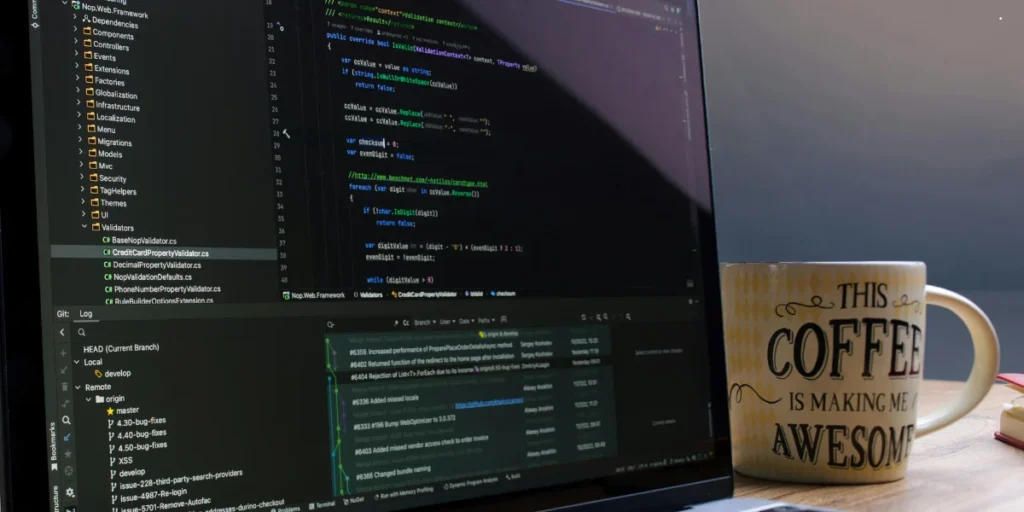
Technical expertise meets accessibility as software development evolves into a side hustle accessible to non-programmers alongside traditional coders.
Development Opportunities in 2026
AI-related job postings have grown 74% year-over-year, with platform engineering emerging as a distinct discipline focused on building internal developer platforms. Full-stack engineers increasingly incorporate AI features, including chat interfaces, recommendation systems, and intelligent automation as core competencies.
Income Range for Developers
Software development ranks among the best side hustles Australia offers, with front-end developers earning AUD 137,609.12 to AUD 191,123.78. Full-stack developers command AUD 168,188.93 to AUD 229,348.53, whilst AI/ML engineers reach AUD 275,218.24 to AUD 458,697.07 annually. Junior developers start at AUD 122,319.22 to AUD 137,609.12, mid-level developers earn AUD 137,609.12 to AUD 175,833.88, and senior developers achieve AUD 183,478.83 to AUD 229,348.53 or higher.
AI and No-Code Platforms
Traditional AI app development costs AUD 30,579.80 to AUD 305,798.05 and take months to complete. In contrast, no-code tools allow anyone to design and launch AI apps in minutes without developers, democratising app creation for non-technical users through visual interfaces and drag-and-drop editors.
Specialised Virtual Assistant Services
Generalist virtual assistants face declining demand as client seek specialists who understand specific industries and workflows. This shift transforms virtual assistance into one of the best side hustles Australia offers for those willing to develop niche expertise.
High-Value VA Niches
Admin support VAs manage emails, schedule staff, and prepare documents for busy entrepreneurs. Bookkeeping VAs process invoices and track expenses for small businesses. Social media VAs create content and engage users for coaches and local businesses. Executive VAs research, prep presentations, and work with stakeholders for C-suite executives.
VA Income Potential
Virtual assistants in Australia earn an average of AUD 89,065.21 annually. Entry-level VAs with zero to two year of experience charge AUD 38.22 to AUD 53.51 hourly, mid-level practitioners with three to five year earn AUD 53.51 to AUD 76.45, whilst experienced VAs command AUD 76.45 to AUD 122.32 per hour.
Related Article: Side Hustle Ideas That Don’t Need Experience: Start Today!
Conclusion – Highest Paying Side Hustles Australia 2026
The seven side hustles outlined above demonstrate that AI enhancement has become essential rather than optional for maximising income in 2026. Freelancers, bookkeepers, content creators, consultants, course developers, software builders, and virtual assistants all share one common thread: those integrating generative AI tools earn substantially more than traditional practitioners. Notably, success doesn’t require technical expertise. The barrier to entry has lowered through no-code platforms and generative AI tools. The real question isn’t whether to adopt these methods but which niche aligns best with existing skills. Start with one opportunity, master the relevant AI tools, and build from there. The highest-paying side hustle is simply the one someone actually launches.
You May Also Be Interested In: AI in Marketing: How Artificial Intelligence Is Reshaping Digital Strategy
What types of AI-powered side hustles are most profitable in 2026?
AI-enhanced freelancing, content creation using AI tools, and virtual bookkeeping with automation software are among the most lucrative options. Freelancers offering AI-enhanced services earn approximately 25% more per hour than those using traditional methods, with rates ranging from AUD 76.45 to AUD 152.90 per hour for automation projects. Content creators using AI tools can earn between AUD 1,528.99 and AUD 15,289.90 monthly, whilst virtual bookkeepers charge AUD 68.80 to AUD 129.96 per hour depending on their registration status and experience.
Do I need technical expertise to start an AI-powered side hustle?
No, technical expertise is not essential for most AI-powered side hustles. No-code platforms and accessible AI tools like ChatGPT, Canva, and Zapier allow non-technical users to create value through visual interfaces and drag-and-drop editors. The most valuable skill is understanding which tasks suit automation versus which require human judgment, rather than deep programming knowledge. Entry-level practitioners can master conversational AI tools and project management platforms without coding experience.
How much can virtual assistants earn in Australia?
Virtual assistants in Australia earn an average of AUD 89,065.21 annually, with rates varying by experience level. Entry-level VAs with zero to two year of experience charge AUD 38.22 to AUD 53.51 hourly, mid-level practitioners with three to five year earn AUD 53.51 to AUD 76.45, and experienced VAs command AUD 76.45 to AUD 122.32 per hour. Specialised virtual assistants focusing on specific niches such as bookkeeping, social media management, or executive support can justify premium rates.