






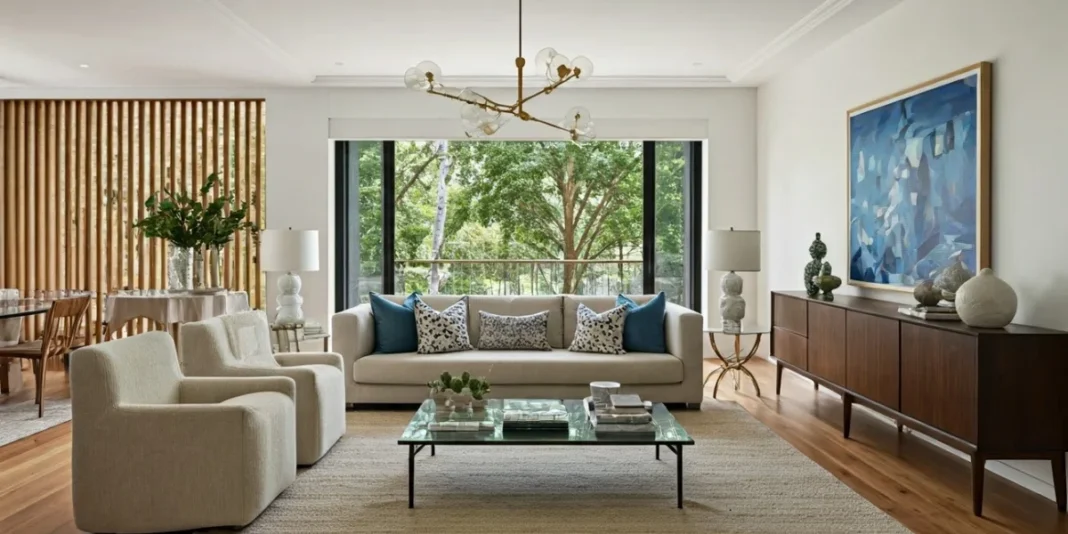

Australian home design is undergoing its most significant transformation in decades. The competitive housing market has created budget pressures for many Australians. Builders and buyers must rethink what truly makes a house feel like home. Design awareness among Australians has reached new heights, and they now require spaces that are both stylish and well-thought-out.
Functionality and streamlined processes lead the way in modern home design. Australia’s leading developers see opportunities in greenfield land developments. They use zero-side setbacks along property boundaries. New homes now feature PV solar systems with battery storage as one of the most popular additions. The exterior design adapts to smaller footprints without compromising livability. Architects pay extra attention to landscaping in their new projects.
The pandemic has completely changed Australians’ view of their living spaces. Versatility stands as a key element. Modern homes have dedicated study options or at least an IT nook that serves as a functional workspace. These features reflect the evolving needs of our lifestyle. This piece examines the breakthroughs transforming Australian homes as we approach 2025.
Affordability-Driven Home Design
Australian home design priorities are changing due to soaring property prices and living costs. Budget-friendly solutions now drive state-of-the-art home construction and layout. Homeowners want spaces that blend current affordability with future value.
Affordability-Driven Home Design Trends
The Australian dream home adapts to economic pressures. Multi-generational living has become the fastest-growing household type. One in five Australians already adopts this setup. Experts predict this number will grow to one in three by 2041. This transformation speeds up the development of secondary dwellings and granny flats. Families stay close while retaining their independence.
Prefabricated housing proves a practical answer. Some prefab homes can reach completion and delivery in as little as 12 weeks. These homes utilise floor cassettes, wall panels, and integrated structural systems that are more effective than traditional building methods.
A clear trend toward smaller, more innovative designs with space-saving layouts has emerged. More homes now feature built-in storage, multi-functional rooms, and efficient use of vertical space. Modern home design tends to build upward instead of spreading out. This approach saves money and helps create housing supply, making homes more affordable.
Affordability-Driven Home Design Benefits
Budget-focused design creates value way beyond the original purchase price. Sustainable design features might cost more upfront but pay off better over time. These investments lead to yearly savings that become more valuable as energy prices rise.
Budget-driven home design creates several economic advantages:
- Lower energy, water, and maintenance bills through efficient systems and durable materials
- Smaller, simpler heating and cooling systems that cost less to buy and run
- Fewer future renovations are needed thanks to adaptable layouts
- Extra income potential from secondary dwellings helps with mortgage payments
Additionally, construction costs account for only 2-3% of the total life-cycle costs, while operating expenses comprise approximately 85%. This illustrates why affordable design must consider long-term operational costs, not just initial construction expenses.
Smaller Homes, Smarter Layouts
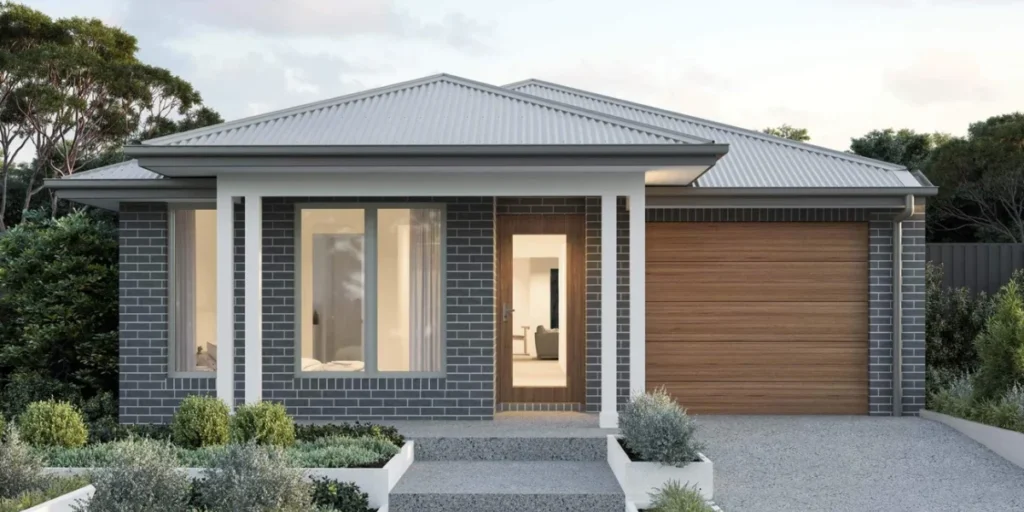
Space efficiency has become the lifeblood of modern Australian home design. Australian homes are getting smaller due to increasing urban density and compact block sizes. Yet this doesn’t mean they have to feel cramped or limited.
Smaller Homes, Smarter Layouts Trends
More homeowners welcome new compact home designs that blend comfort, style, and sustainability. A “small house” ranges between 100 and 200 square metres. These compact dwellings maximise available space with innovative design ideas that prioritise functionality.
Homeowners now prefer thoughtful layouts over sprawling floor plans that utilise every square meter effectively. Modern Australian homeowners require multi-functional spaces to maximise the use of their living areas. These adaptable areas serve many purposes while looking great and working efficiently.
Smooth connections between kitchen, dining and living spaces define open-concept designs. Smart zoning creates distinct areas within open spaces without walls. Accent chairs, coffee tables, and natural elements help define these functional zones naturally.
Today’s homes focus on more than just looks. They include:
- Space optimisation with multi-purpose furniture
- Innovative layouts featuring loft bedrooms and compact kitchens
- Custom cabinetry and feature walls that add personality and function
Smaller Homes, Smarter Layouts Benefits
Well-designed, smaller homes offer advantages way beyond the reach and influence of saving on land costs. These homes reduce construction expenses substantially. Homeowners can spend more on quality finishes in kitchens, bathrooms and built-in features with modest floor areas.
Compact homes need less upkeep, which saves time and money. Cleaning takes less time and resources compared to larger homes. Insurance, electricity, and maintenance costs also remain lower.
Smaller footprints leave more room for yards and gardens than “McMansions” that fill entire blocks. People feel better with more natural light and fresh air from outdoor spaces.
These homes encourage mindful living. One expert says, “A smaller home can feel just as open and spacious as any larger residence”. Clever use of space and fewer unnecessary rooms make all the difference.
Related Article: Why Tiny Homes Are Reshaping Australian Housing: 2025 Market Analysis
Multigenerational Living Spaces
Australian housing culture has undergone a remarkable transformation in the prevalence of multigenerational living. More families now share their homes with three or more adult generations. The numbers tell an interesting story – these living arrangements have increased by 22% in just five years, with 335,000 Australian households opting for this lifestyle.
Multigenerational Living Spaces Trends
One in five Australians now shares their home with multiple generations. Sydney’s numbers are even higher at one in four. By 2041, one-third of households may adopt multi-generational living. Modern home designs have adapted to this change. They now go beyond adding extra bedrooms and feature separate living zones, personal en-suites, and spaces that adapt to different needs.
This lifestyle choice cuts across all demographics. Australian-born families make up two-thirds of multigenerational households. This shows it’s not just a cultural practice anymore. The 2021 Census revealed an interesting contrast – while household sizes dropped from 4.5 people in 1911 to 2.5 today, Australian houses rank among the largest in the developed world. This presents a great opportunity to utilise existing space more effectively.
Multigenerational Living Spaces Benefits
Multigenerational living offers more than just financial perks. Families with young children often receive great support from live-in grandparents who assist with childcare. The numbers make sense too – full-time daycare costs over AUD 76,449.51 annually for two children.
Older Australians find several advantages in these arrangements:
- A better option than aged care facilities
- A chance to age at home while staying independent
- Daily family interactions that boost their quality of life
Home designers have responded by creating distinct zones that work like separate “neighbourhoods” within one house. This addresses the need for privacy in shared spaces.
Energy-Efficient Home Design
Australian homeowners now put energy efficiency first when building or renovating their homes. According to studies, almost 40% of a household’s energy is used for heating and cooling. New builds could reduce this to almost zero through proper climate-appropriate design.
Energy-Efficient Home Design Trends
Several key trends are transforming the way Australians perceive energy efficiency. Passive house design has become the lifeblood of modern construction. Homes now face specific directions to optimise natural heating, cooling, and ventilation. This reduces dependence on mechanical systems. Strategic window placement helps utilise solar energy in winter and keeps heat out during summer.
Smart home technology has evolved far beyond its initial simple functions. In 2024, AI systems will learn household patterns to help reduce energy consumption. They turn off climate control when nobody’s home and turn it back on before people return. These smart systems also show peak electricity usage times through metering devices.
Building materials keep getting better. Self-healing concrete, biobricks, and thermal insulating paints help save energy and extend the lifespan of buildings. Solar panels have become more efficient, and their prices have dropped 80% since 2008.
Energy-Efficient Home Design Benefits
Energy-efficient homes do more than help the environment. People living in 7-star, all-electric houses save AUD 688.05 each year on heating and cooling compared to those in 6-star homes. New energy-efficient homes in Queensland help owners save approximately AUD 282.86 per year on electricity bills.
These homes are healthier, too. Quality windows stop condensation that causes mould, while heat-recovery ventilation systems keep fresh air moving. Victorian studies found that homes with energy improvements saved AUD 1,356.21 per person on healthcare during one winter.
Work-From-Home Integration

The rise of remote work during the pandemic has forever changed how Australians view their living spaces. Nowadays, 42% of workers do at least some part-time work from home. Home offices have evolved from a luxury into an essential part of modern home design.
Work-From-Home Integration Trends
New home construction priorities have shifted due to the growing emphasis on integrated workspaces. Four in ten Australians now work from home. Builders have started to include purpose-built offices instead of makeshift solutions. Natural lighting serves as the lifeblood of these designs. Windows placed at strategic spots offer energy savings and boost well-being. Natural light provides vitamin D that helps people sleep better and handle stress more effectively.
Modern home offices prioritise three vital elements: sound isolation, ergonomic design, and seamless tech integration. New homes feature work areas that are separate from busy spaces. These offices often sit next to master bedrooms rather than kitchens or living rooms to minimise noise.
Work-From-Home Integration Benefits
Well-designed workspaces offer more than just convenience. Workers save time and money by eliminating commutes, coffee runs, and work clothes. The environment benefits from reduced carbon emissions as fewer people travel.
Home-based professionals report 35% higher job satisfaction. They control their workspace environment completely – from room temperature to music choice. Remote workers save AUD 4,892.77 yearly on work expenses. Companies reduce costs by AUD 16,818.89 per employee each year by downsizing office space.
Functional and Adaptable Interiors
Australian homes in 2025 are expected to showcase flexibility as their standout design feature. Modern interiors adapt to homeowners’ needs without requiring expensive renovations, reflecting lifestyle changes and budget considerations.
Functional and Adaptable Interiors Trends
Gone are the days of rooms with single purposes. Multipurpose room designs lead the way in new construction projects. A space serves as your gym today, becomes a nursery tomorrow, or welcomes guests as a suite. Today’s homes feature innovative storage solutions that do more than organise – they blend with the home’s flow and look.
Sliding screens have become a popular addition that connects rooms and doubles the usable space. Australian homeowners now lean away from repetitive minimalism. They prefer warmer interiors filled with personality that match their lifestyle.
Functional and Adaptable Interiors Benefits
Future-proofing stands out as the most significant advantage of adaptable interiors. A well-laid-out home meets your current needs and adapts to future lifestyle changes. This design approach boosts long-term value by maximising space and improving investment returns.
People living in smaller homes create an open feel through multifunctional spaces. The most extensive longitudinal study shows these designs help Perth’s modest-sized homes feel more spacious.
Light and Airy Interior Palettes
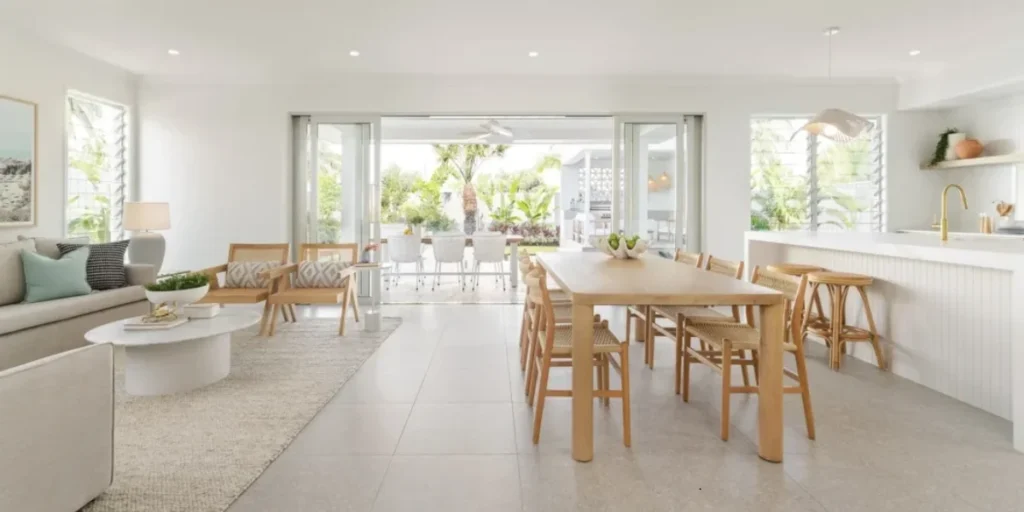
Australian homes have seen a remarkable change toward lighter, more reflective tones. Designers now approach interior colour schemes differently in 2025 as spaces need to feel expansive and uplifting.
Light and Airy Interior Palettes Trends
Soft pastel tones, crisp whites, and sandy neutrals attract Australian homeowners who want their spaces to feel more open and peaceful. Warm whites paired with creams, wheats, and golds now take the place of starker alternatives. The Dulux Colour Forecast for 2025 predicts a significant increase in warm neutrals throughout their palettes. These calming, softer hues respond well to uncertain times.
Light blues and greens promote calmness, while pastel colours create similar effects. A bold statement is made by adding deeper accent colours to light rooms. Navy blue or deep green on a single wall can improve the overall appeal without making the space feel cramped.
Light and Airy Interior Palettes’ Benefits
Lighter palettes make spaces look bigger. Neutral colour schemes help rooms feel larger, airier, and more open. Natural light bounces off these lighter shades, making even small spaces more inviting.
People living in well-lit homes feel happier and more content. Natural light exposure has been linked to better mental health, according to studies. Additionally, areas with lots of light improve focus, vitality, and concentration.
Open-Plan Living and Kitchen Spaces
Open-plan living has evolved from an architectural trend to a must-have feature in Australian homes over the last several years. This design removes walls between shared spaces to create a continuous connection between kitchens, dining areas, and living rooms.
Open-Plan Living and Kitchen Spaces Trends
New home designs are often characterised by the “great room” concept, which combines the kitchen, dining, and living areas into a single, unified space. Kitchen islands now serve as central features with multiple uses, from food preparation to casual dining. Modern open layouts use visual cues instead of physical barriers to define different zones. Designers achieve this through strategic lighting, furniture placement, and flooring transitions.
Open-Plan Living and Kitchen Spaces: Benefits
Open layouts encourage family interaction, allowing parents to watch their children while cooking and guests to move freely during gatherings. These designs do more than look good – they maximise natural light distribution and improve the home’s airflow. Smaller homes appear more spacious with open-plan configurations. Homes with open layouts also tend to sell for higher prices.
Compact Lot Optimisation
The lack of land in Australian cities has led to a surge in narrow lot homes, built on lots less than 10 metres wide. Australian house sizes have decreased by nearly 30% over the last decade, yet homeowner satisfaction has increased.
Compact Lot Optimisation Trends
Narrow lot designs now maximise limited space through innovative techniques. Contemporary designs feature light-filled interiors through strategic window placement, open floor plans, and creative skylights. Homes now grow upward instead of outward, making vertical space usage a key feature. Simple closets have evolved into sophisticated built-in cabinetry, under-stair storage, and cleverly hidden niches.
Compact Lot Optimisation Benefits
These narrow lot homes adapt well to different family sizes and lifestyles, despite their size constraints. They provide affordable options in prime urban locations without sacrificing functionality. Many Australians can now enter neighbourhoods they couldn’t afford before, thanks to these designs. The homes reflect a ‘less is more’ philosophy that values quality over spatial quantity.
Modern Home Design for Lifestyle Needs
Modern Australian homes have evolved beyond basic shelter into personal sanctuaries that support the physical and mental well-being of their residents. Architects now place lifestyle-centred design at the heart of their residential projects in 2025.
Modern Home Design for Lifestyle Needs Trends
Wellness-oriented features now dominate modern home design. Advanced ventilation systems that improve air quality have become crucial in reducing allergens and pollutants. Natural daylight cycles get replicated through circadian lighting to regulate sleep patterns and boost overall health. New constructions now commonly feature toxin-free materials, such as low-VOC paints and environmentally friendly finishes.
Bathrooms have moved away from basic functionality to become spa-like retreats. Steam showers, soaking tubs, and natural materials create a sanctuary-like atmosphere. New developments showcase uninterrupted flow between indoor and outdoor spaces through sliding doors, patios, and thoughtful landscaping.
Modern Home Design for Lifestyle Needs Benefits
Homes designed around specific lifestyles lead to better mental and physical health outcomes—natural light streams through large windows to regulate sleep cycles and raise mood. Smart design helps maintain steady and comfortable indoor temperatures, regardless of extreme weather conditions.
These lifestyle-focused homes bring financial benefits through lower maintenance needs and compact, efficient mechanical systems. Buyers who want homes that match their lifestyle choices drive up the resale value of these properties.
Conclusion – Home Design
Australian home design faces a turning point as we approach 2025. Economic pressures, changing family structures, and environmental awareness have transformed the way people think about, design, and inhabit homes across the country. People simply need spaces that strike a balance between affordability and functionality, sustainability and comfort, and aesthetic appeal and practical solutions.
Our research demonstrates how affordability now streamlines processes, rather than limiting them. Smaller footprints with more innovative layouts show that reduced square meterage doesn’t compromise liveability. One-fifth of Australian households benefit from multigenerational living arrangements that offer financial advantages and stronger family bonds.
Australian homes have become personal sanctuaries that support residents’ physical and mental well-being through thoughtful design. People no longer prioritise size over substance or trend over function.
These ten design changes mean more than passing trends – they point to a lasting move toward homes that work harder, adapt better, and support residents’ needs more fully. Australian housing continues its progress toward spaces that balance immediate affordability with long-term value. These homes combine aesthetic appeal with practical functionality to create truly liveable environments. Without doubt, homes built with these principles will stay relevant and desirable well beyond 2025.
You May Also Be Interested In: Protecting Your Rental: A Guide to Investment Property Insurance in Australia
What are the key trends shaping Australian home design in 2025?
The main trends include smaller, smarter layouts, multigenerational living spaces, energy-efficient designs, integrated work-from-home areas, and adaptable interiors. There’s also a focus on light and airy colour palettes, open-plan living, and optimising compact lots.
How are Australian homes becoming more energy-efficient?
Australian homes are incorporating passive design principles, smart home technology, and renewable energy systems, such as solar panels. They’re also using energy-efficient appliances, improved insulation, and double or triple-glazed windows to reduce energy consumption and costs.
Why is multigenerational living becoming more popular in Australia?
Multigenerational living is gaining popularity due to housing affordability issues, the need for childcare support, and the desire to care for ageing parents. It offers financial benefits, strengthens family bonds, and provides a practical solution to various lifestyle needs.
How are work-from-home spaces being integrated into Australian homes?
Work-from-home spaces are now being purposefully designed with considerations for natural lighting, acoustic separation, and ergonomic furniture. They’re often positioned away from high-traffic areas and incorporate smart storage solutions and cable management systems.
What benefits do open-plan living spaces offer in modern Australian homes?
Open-plan living spaces foster better family interaction, maximise natural light distribution, and improve airflow throughout the home. They create an illusion of greater space in smaller dwellings and typically command higher resale value in the property market.